
Dispatches from the browser frontier
Suchintan Singh
73 posts by Suchintan Singh.
Stories and ideas from the Skyvern team.
January
 8 min read
Browser Use vs Browse AI: Which Tool Fits Your Workflow? (December 2025)
You're looking at Browser Use options, such as Browse AI, and trying to figure out which makes sense for your workflow. Browser Use requires Python knowledge but gives you complete flexibility. Browse AI removes the coding barrier with a visual recorder. The right choice depends on who's building the automations and how complex your tasks are. Here's what you need to know. TLDR: * Browser Use requires Python coding for AI-controlled automation; Browse AI uses no-code recording * Browser Use
December
 7 min read
Browserbase vs Browse AI: Which Tool Fits Your Automation Needs? (December 2025)
You need to automate browser tasks, and now you're stuck choosing between tools that look similar but work completely differently. Browserbase versus Browse AI isn't really a fair comparison because one requires coding while the other doesn't. We'll break down what each tool actually does, who should use them, and where both fall short on complex workflows. TLDR: * Browserbase provides managed browser infrastructure for developers writing automation code. * Browse AI offers no-code web scrap
 8 min read
Browser Use vs Autotab: Which AI Automation Tool is Better? (December 2025)
When you're comparing browser automation tools like Browser Use and Autotab, the differences matter more than the similarities. Browser Use interprets text descriptions through AI, analyzing pages and executing actions in real time. Autotab records your workflow demonstrations and generates Python code that replays those exact steps. One adapts to changes through AI reasoning, the other gives you explicit code you can modify and debug. Your decision hinges on whether you prefer AI-driven flexibi
 8 min read
Browserbase vs Autotab: Which Browser Automation Tool Works Better? (December 2025)
The comparison between Browserbase and Autotab matters because they represent two fundamentally different ways to automate browsers. With Browserbase, you write Selenium or Playwright scripts that run on their cloud infrastructure. With Autotab, you show tasks through recordings and the system replicates them. Both approaches work until you hit the maintenance wall that comes with selector-based automation. TLDR: * Browserbase hosts cloud browsers but requires you to code all automation in Pl
 8 min read
Browserbase vs Firecrawl vs Skyvern: Which is Better for Workflow Automation? (December 2025)
You need browser automation that actually completes tasks, not just infrastructure or data extraction. Browserbase manages headless browsers while you write the scripts. Firecrawl pulls content into markdown or JSON. But logging into supplier portals, submitting purchase orders, and downloading invoices? That requires something different. TLDR: * Browserbase provides browser infrastructure while Firecrawl extracts data as markdown/JSON * Skyvern automates interactive workflows like form fill
 7 min read
Browser Use vs Axiom: Which Browser Automation Tool Wins in December 2025?
If you're researching this Browser Use vs Axiom comparison, you're probably stuck deciding between learning Python for automation or using a visual tool that records your clicks. Browser Use gives developers flexibility with AI-driven browser control, while Axiom targets people who want to avoid code entirely. The problem is that neither approach is perfect, and your choice depends on your technical background and what you're trying to automate. TLDR: * Browser Use requires Python skills whil
 7 min read
Browserbase vs Axiom: Which Browser Automation Tool Fits Your Needs? (December 2025)
You need browser automation, and you're weighing Browserbase vs Axiom to figure out which one fits. As 66% of businesses automate at least one process and the automation market grows from $13 billion in 2024 to a projected $23.9 billion by 2029, the real question isn't which is better overall, it's which is better for your specific situation. Are you a developer who needs API access and infinite scaling, or are you looking for a visual tool that requires zero coding? Browserbase connects your Pl
 8 min read
Browser Use vs Firecrawl vs. Skyvern: Which is Better? (Updated July 2026)
You need to automate something on the web, and you're stuck choosing between Browser Use and Firecrawl. These automation tools take opposite approaches: one uses AI to interact with pages like a person would, the other extracts content without any clicking. Let's look at what makes each tool different so you can stop guessing and start building. TLDR: * Browser Use automates tasks through natural language but requires Python setup and infrastructure * Firecrawl extracts static content via AP
 6 min read
Browserbase vs Hyperbrowser AI: Which is Better? (November 2025)
You're looking at hyperbrowser ai and Browserbase because you need automation that scales. Browserbase runs serverless Chromium instances with session persistence, while Hyperbrowser AI focuses on anti-detection and concurrent sessions. Both services handle the infrastructure piece, but they leave you building all the intelligence yourself. This post breaks down the actual differences between these two options. You'll see how they handle stealth features, what their pricing really costs at scal
 6 min read
Browser Use vs Hyperbrowser AI: Which is Better? (November 2025)
The browser automation comparison you need isn't about feature lists or pricing tiers. It's about what happens when your target website redesigns overnight, or when you need to automate across 50 different vendor portals without writing 50 different scripts. Let's see how Browser Use and Hyperbrowser AI handle the challenges that matter for your workflows. TLDR: * Browser Use requires self-managed infrastructure and per-site scripts that break when websites change * Hyperbrowser AI provides
November
 7 min read
Best 2FA Browser Automation Tools for Enterprise Workflows (November 2025)
Automating through 2FA used to mean writing custom code for every single site. You'd extract secrets manually, maintain TOTP libraries, and pray nothing broke when a vendor updated their login page. TOTP browser automation tools have gotten better, but not all of them handle the complexity of real-world authentication flows. We tested the options available in November 2025 to see which ones actually scale. TLDR: * 2FA automation eliminates manual login interruptions across multiple vendor por
 9 min read
Best AI-Powered Form Filling Tools for Enterprise Workflows (Updated July 2026)
When was the last time you had to update a broken automation script because a vendor changed their website layout? If you're like most enterprise teams, it happens constantly. The latest intelligent form processing tools use computer vision and AI to avoid this problem entirely, adapting to changes without needing developer intervention. Here's what actually works in practice. TLDR: * AI form filling tools use LLMs and computer vision to adapt to layout changes automatically * Traditional RP
 9 min read
Best Proxy-Integrated Automation Platforms for Global Testing (November 2025)
Everyone talks about global testing, but actually doing it means dealing with proxies, rotation settings, and geographic targeting that may or may not work as advertised. Location-based automation should be straightforward: pick a location, run your workflow, get accurate results. Instead, most solutions make you juggle separate proxy providers and automation frameworks. We compared the platforms that claim to simplify this process to find out which ones actually save you time and which ones jus
 10 min read
AI Web Agents: Complete Guide to Intelligent Browser Automation (Updated July 2026)
Everyone's dealt with the frustration of maintaining automation scripts that break constantly. A website updates its design, your Selenium script fails, and you're back to manual work until someone fixes the code. AI web agents take a different approach by understanding web pages visually and semantically, so they keep working even when sites change their underlying structure. TLDR: * AI web agents use LLMs and computer vision to automate browser tasks without breaking when websites change *
October
 12 min read
Mastering Page Object Model (POM) in Test Automation (Updated July 2026)
A developer renames a button ID in a morning deploy. By afternoon, your test suite has 47 failures. Every one traces to the same cause: a locator string that no longer matches anything on the page. You update the page object, find the four test files that imported it, update each one, and run the suite again. This is the maintenance loop that Page Object Model teams live in. Not because POM is poorly designed, but because it encodes assumptions about the UI that developers keep invalidating. Mos
 10 min read
Top Web Automation Solutions & Techniques - October 2025 Edition
You've probably tried automating browser tasks before, only to watch your scripts break the moment a website updates its layout. Traditional automation tools like Selenium require constant maintenance and technical expertise, leaving many teams stuck with manual workflows that eat up hours every week. Fortunately, modern web automation tools are making big improvements by using AI to understand websites like humans do, adapting automatically to layout changes without requiring script updates. Le
 7 min read
Best Intelligent Process Automation Platforms October 2025
You've likely tried automating browser-based workflows before, only to watch your scripts break every time a website updates its layout. While traditional automation tools promise intelligent process automation, they still rely on selectors that fail when interfaces change, leaving you with constant maintenance headaches. Modern intelligent process automation platforms use AI and computer vision to understand websites like humans do, adapting automatically to changes without breaking your workfl
 8 min read
Browser Automation MCP Servers: The Complete Implementation Guide for Adaptive Web Automation (October 2025)
You've probably tried automating browser tasks before, only to watch your scripts break the moment a website changes its layout. Traditional automation tools rely on fragile selectors that snap with every UI update, leaving you constantly fixing broken workflows. Fortunately, there's a better approach available through browser automation MCP servers that combine AI reasoning with adaptive web interaction. These intelligent systems adapt to website changes automatically, finally delivering the re
 14 min read
How to Handle Browser Automation Session Persistence 2026
You've probably experienced the frustration of browser automation scripts that work perfectly until they don't. Your carefully crafted workflows break when sessions expire, forcing you to rebuild authentication flows and debug cookie management issues that shouldn't exist in the first place. The traditional approach of manually handling session persistence creates more problems than it solves, with brittle scripts that require constant maintenance every time a website updates its authentication
 8 min read
AI RPA: The Ultimate Guide for October 2025
You've probably tried automating browser tasks, only to watch your scripts break when websites update. Traditional automation tools rely on brittle selectors that fail when buttons move or forms change, leaving you constantly fixing broken workflows instead of focusing on strategic work. Fortunately, modern AI RPA solutions use computer vision and language models to understand websites like humans do, adapting to changes automatically without requiring constant maintenance. This intelligent app
 8 min read
Skyvern vs Scripts: What's the Difference?
You are searching for a browser automation tool, but you are still confused if you should opt for tools that follow traditional scripting (Selenium, BrowserStack, etc) or modern AI automation tools, like Skyvern. We'll break down the real differences between Skyvern vs scripts, where traditional scripting still makes sense, and when modern AI-powered approaches actually deliver on their promises. If you're weighing both options for your automation needs, this comparison covers what really matte
 8 min read
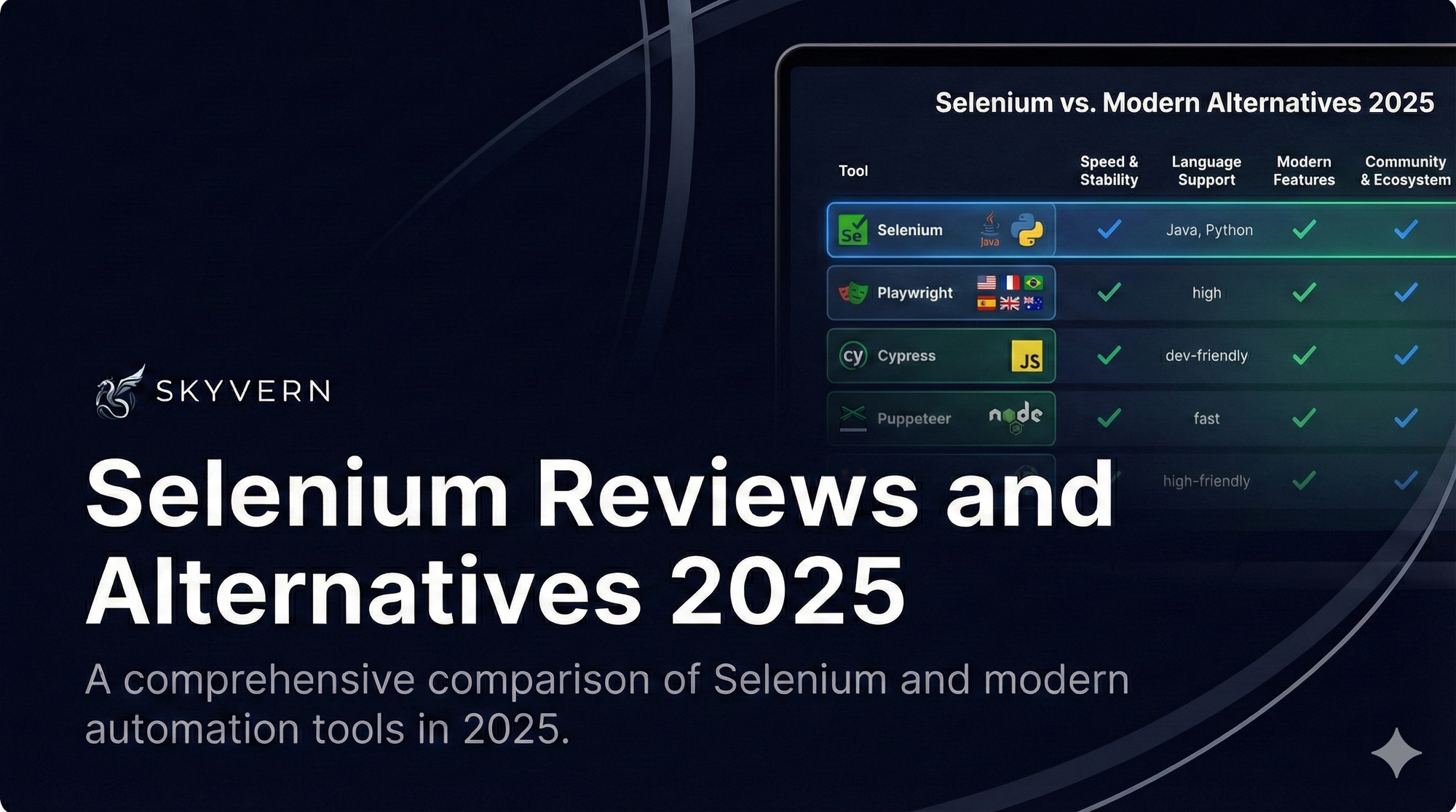
Selenium Reviews and Alternatives 2025
Ever spent hours fixing broken Selenium scripts after a website redesign, only to watch them break again the next week? You're not alone: countless development teams waste valuable time maintaining brittle automation that crumbles whenever sites update their layouts. While you might think this maintenance nightmare is part of every browser automation out there, you can still find several modern alternatives that get rid of these headaches entirely. Below, we are sharing a list of AI browser aut
 6 min read
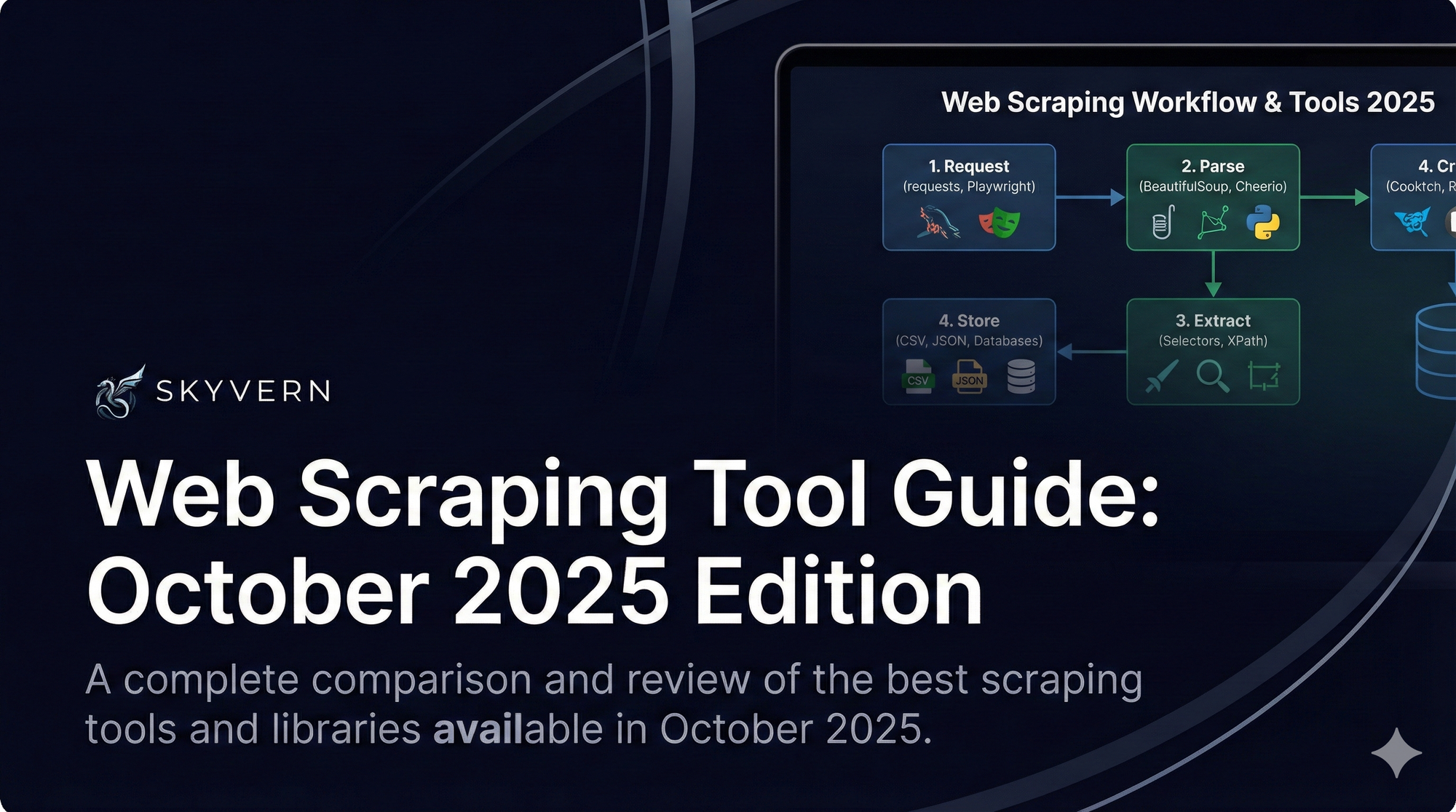
The Ultimate Web Scraping Tool Guide - October 2025 Edition
You've likely experienced the frustration of setting up a web scraping tool only to watch it break the moment a website changes its layout. We've all been there: spending hours writing scripts that work perfectly until the next site update makes them useless. The challenge is that most businesses are still stuck with brittle automation that can't adapt, or they're limited by simple tools that fall apart when faced with complex authentication and changing content. That's where AI powered web sc
 7 min read
Python Web Scraping Tutorial: Complete Guide Updated July 2026
You've probably spent hours wrestling with Python scraping libraries that break whenever a site updates. Tools like Beautiful Soup and Selenium were built for a simpler web (one that no longer exists in 2025). Modern websites actively block scrapers with shifting layouts, anti-bot measures, and JavaScript execution that make XPath selectors useless overnight. A scraper that works today can break within days on sites with frequent layout updates or active anti-bot policies. In this post, we'll c
 7 min read
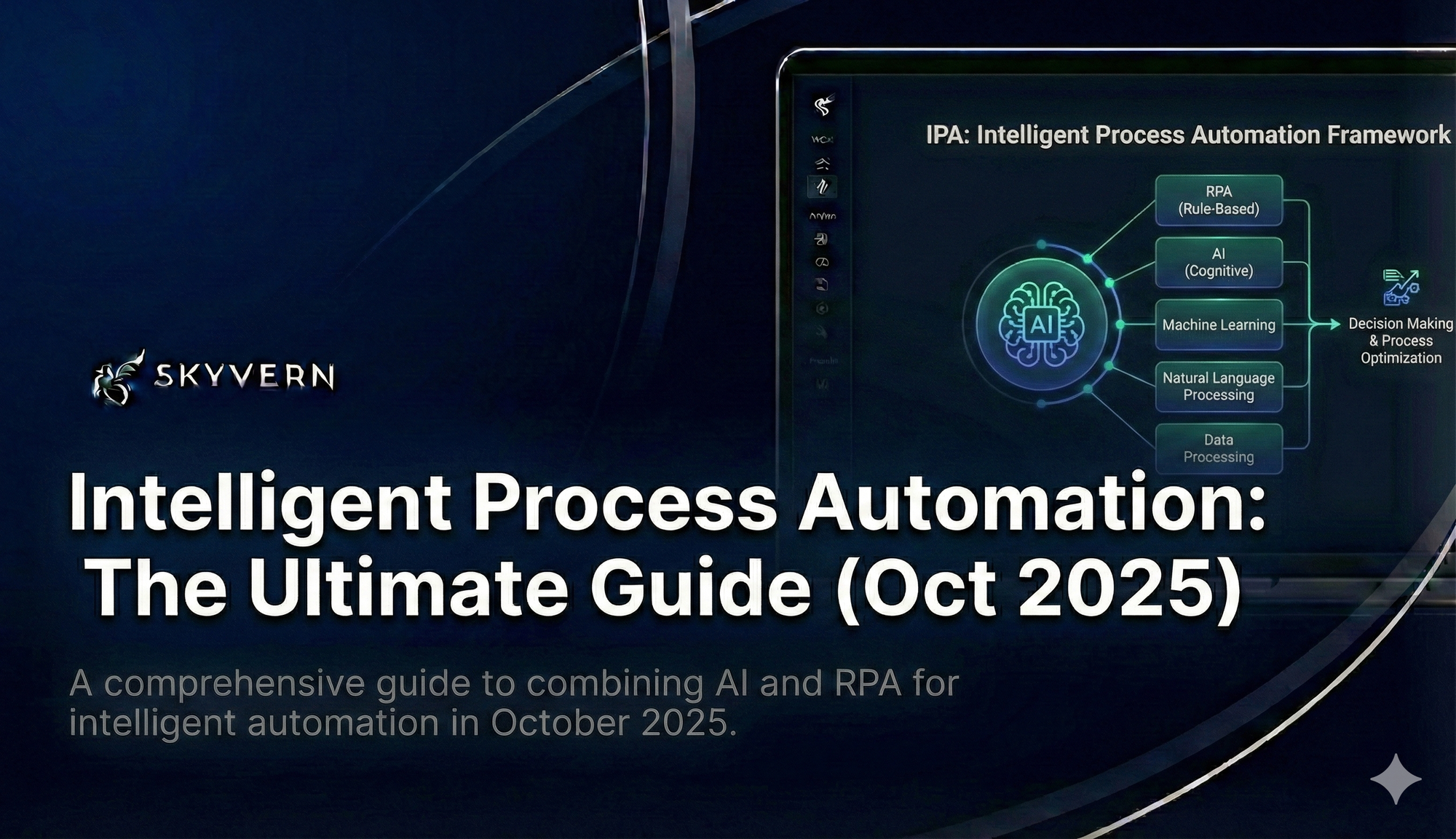
Intelligent Process Automation: The Ultimate Guide for October 2025
Manual workflows likely eat up half your team's day, clicking through the same browser-based tasks over and over. Fortunately, intelligent process automation tools have finally evolved to the point where AI can actually handle those complex, unpredictable workflows that traditional automation scripts constantly break on. TLDR: * IPA combines AI with automation to handle complex workflows that break traditional scripts * Organizations achieve 50-70% task automation and 20-35% cost savings wit