Skyvern blog
Engineering & Research
Technical articles on browser agents, benchmarks, testing, and the engineering behind Skyvern.
Featured posts
 12 min read
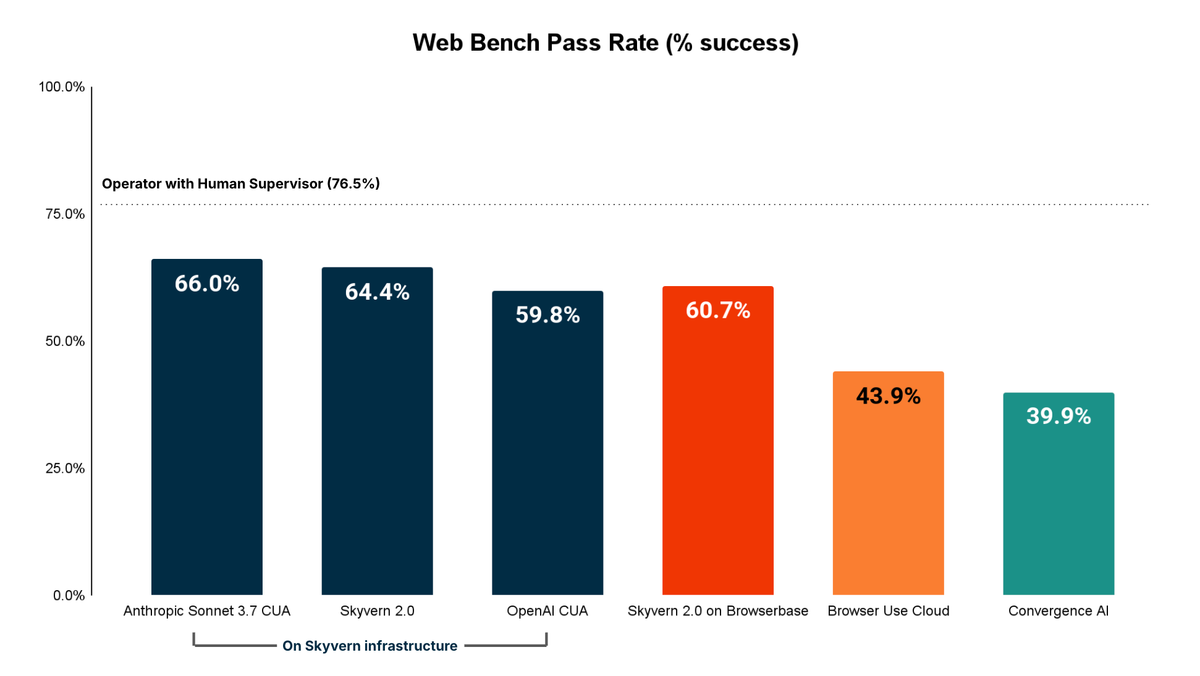
Web Bench: A Fresh Approach to Comparing AI Browser Agents (Updated June 2026)
Every agent vendor right now claims state-of-the-art performance on browser tasks. Skyvern, Browser-use, OpenAI's Operator are all shipping numbers that look strong on paper. But the benchmark most teams use to compare these agents, WebVoyager, covers just 643 tasks across 15 websites. That's a narrow slice of the internet, and it mostly tests agents on read-heavy tasks where the real friction hasn't kicked in yet. The harder problems are logging in, solving 2FA, filling out forms, and downloadi
Suchintan SinghEngineering & Research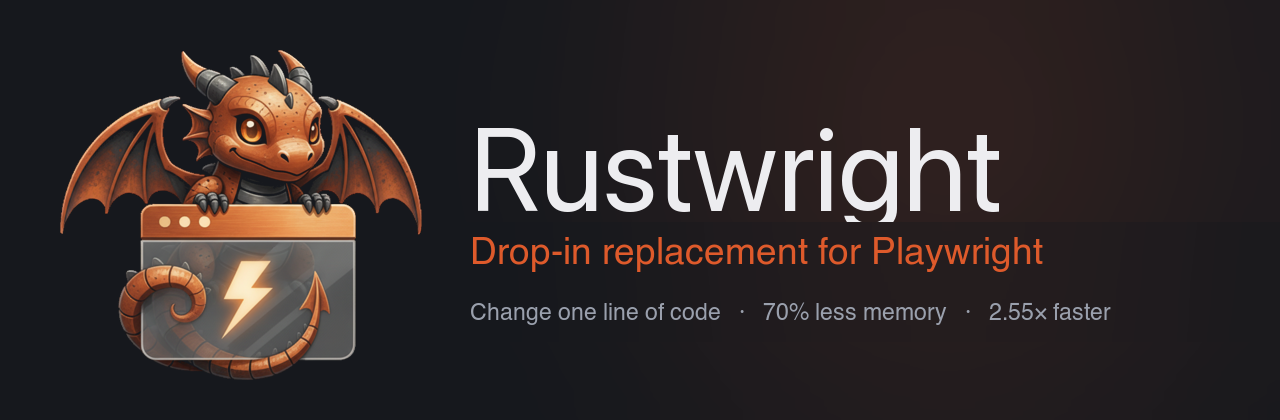 2 min read
Rustwright: Playwright rewritten in rust that occupies 70% less memory (and is 2.55x faster)
Hey everyone, Suchintan from Skyvern (YC S23). We run browser automation for AI agents at scale, and we're launching Rustwright: Playwright on an in-process Rust CDP engine. The engine consumes 70% less memory than Playwright, and is 2.55x faster to boot. We built this to improve Skyvern’s memory footprint, and thought this would be independently valuable to the broader community The whole idea fits in two lines: playwright-python: your code ──pipe──► Node driver ──CDP──► Chromium rustwrig
Suchintan SinghEngineering & Research 7 min read
How We Cut Token Count by 11% and Boosted Success Rate by 3.9% Using HTML Instead of JSON in LLM Calls (Updated June 2026)
Every time Skyvern takes an action on a web page, it sends an annotated screenshot plus a structured description of every interactable element to a multimodal LLM: buttons, inputs, dropdowns, the works. That description is where a lot of tokens go. We'd been representing those elements as JSON, which is readable and explicit, but also verbose. After hearing from others in the space that HTML and markdown representations could cut token counts by 15% or more, we decided to test it ourselves. The
Suchintan SinghEngineering & Research
Latest
- 2 min read
Rustwright: Playwright rewritten in rust that occupies 70% less memory (and is 2.55x faster)
Hey everyone, Suchintan from Skyvern (YC S23). We run browser automation for AI agents at scale, and we're launching Rustwright: Playwright on an in-process Rust CDP engine. The engine consumes 70% less memory than Playwright, and is 2.55x faster to boot. We built this to improve Skyvern’s memory footprint, and thought this would be independently valuable to the broader community The whole idea fits in two lines: playwright-python: your code ──pipe──► Node driver ──CDP──► Chromium rustwrig
Suchintan SinghEngineering & Research - 7 min read
How We Cut Token Count by 11% and Boosted Success Rate by 3.9% Using HTML Instead of JSON in LLM Calls (Updated June 2026)
Every time Skyvern takes an action on a web page, it sends an annotated screenshot plus a structured description of every interactable element to a multimodal LLM: buttons, inputs, dropdowns, the works. That description is where a lot of tokens go. We'd been representing those elements as JSON, which is readable and explicit, but also verbose. After hearing from others in the space that HTML and markdown representations could cut token counts by 15% or more, we decided to test it ourselves. The
Suchintan SinghEngineering & Research  12 min read
Getting Claude to QA Its Own Frontend Work | Updated July 2026
Just a brief recap: people use Skyvern to automate the repetitive browser work nobody wants to do: pulling invoices from vendor portals, filling out healthcare forms, extracting data from sites that don’t have APIs. You can try it out here: https://github.com/Skyvern-AI/Skyvern We’ve been using Claude code a lot and kept running into the same failure mode: the code looks kinda right, type checks pass, but when you go to test the changes, something’s off: button doesn’t fire, form overflows or t
Suchintan SinghEngineering & Research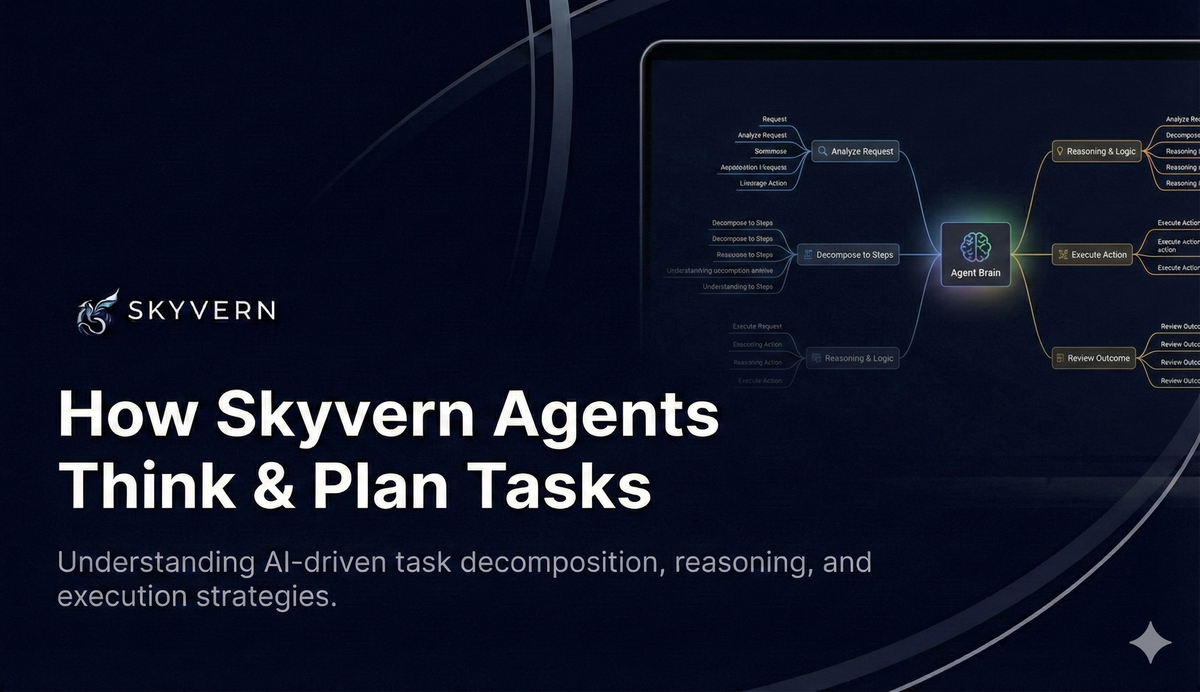 10 min read
How Skyvern Agents Think and Plan Browser Automation Tasks Updated June 2026
Ever wondered why your browser automation scripts break every time a website updates its layout? At Skyvern, we've built AI browser automation that thinks through tasks like a human would, using advanced reasoning instead of fragile selectors that break at the first sign of change. Our agents plan each task step by step, making real-time decisions about what to do next based on what they actually see on the page. No more maintenance headaches when sites change. This is the class of problem Age
Suchintan SinghEngineering & Research 8 min read
How Skyvern Handles Authentication
Ever tried to automate a browser workflow only to get stuck at the login screen? Most AI browser automation tools promise simple workflows, but fail completely at authentication, leaving you manually entering passwords, dealing with 2FA codes and solving CAPTCHAs every time. This guide walks through how Skyvern handles complex login scenarios, from basic username/password flows to multi-factor authentication and CAPTCHA solving, so you can finally achieve true end-to-end browser automation. TL
Suchintan SinghEngineering & Research 10 min read
How Skyvern Reads and Understands the Web
Learn how AI browser automation uses LLMs and computer vision to create reliable web automation that adapts to website changes, replacing fragile XPath scripts.
Suchintan SinghEngineering & Research- 12 min read
Web Bench: A Fresh Approach to Comparing AI Browser Agents (Updated June 2026)
Every agent vendor right now claims state-of-the-art performance on browser tasks. Skyvern, Browser-use, OpenAI's Operator are all shipping numbers that look strong on paper. But the benchmark most teams use to compare these agents, WebVoyager, covers just 643 tasks across 15 websites. That's a narrow slice of the internet, and it mostly tests agents on read-heavy tasks where the real friction hasn't kicked in yet. The harder problems are logging in, solving 2FA, filling out forms, and downloadi
Suchintan SinghEngineering & Research  8 min read
Skyvern 2.0: How We Reached 85.85% on the WebVoyager Eval (Updated July 2026)
Skyvern sits within the Agentic Process Automation (APA) category, where AI agents handle multi-step workflows across portals and web-based systems that have no direct API. Browser automation is one execution layer within that stack: the part that handles the credential-guarded, portal-heavy work that neither traditional RPA nor API integrations can reach. Skyvern 2.0 scored 85.85% on the WebVoyager Eval as of January 2025, placing among the top performers in web navigation tasks at that time.
Suchintan SinghEngineering & Research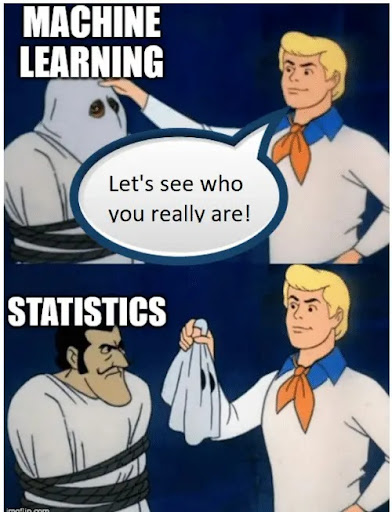 1 min read
The fundamental difference between Engineering and Data Science
I spent 4 years before starting Skyvern working at the intersection of Engineering and Data science. I had the honour of building the Search systems for 2 companies: Faire and Gopuff. I learned something very important in this journey: Data Science and Engineering are fundamentally different fields. How? Engineering problems tend to have a clearly defined problem and solution. They are deterministic in nature, and by virtue of that determinism have a solution that can solve that problem. Do yo
Suchintan SinghEngineering & Research 1 min read
Learning the hard way: AWS EC2 /tmp/ folder is always loaded into memory
We fixed a memory leak in our codebase It's rare for companies to talk about backend changes.. but this one is super important We kept having issues where our customers' tasks would randomly die. We had no idea what was going on 1. We did running profiles of our EC2 instances and noticed that memory was spiking right before a worker would die... how interesting 2. We also knew one small quirk about our product: we would save all screenshots / llm calls / downloaded files to the /tmp/ director
Suchintan SinghEngineering & Research 2 min read
How we accidentally burned through 200GB of proxy bandwidth in 6 hours
Context Skyvern is an AI agent that helps companies automate workflows in the browser. We run leverage proxy networks and run headful browser instances in the cloud to facilitate most of our automations. 😱 200GB of proxy bandwidth was approximately $500 burned over the course of 6 hours One fatal morning I woke up one morning to an alarm on my phone – Skyvern's failure rate was through the roof. Classic startup moment. Looking through our alerts, I noticed that our proxy bandwidth alert ha
Suchintan SinghEngineering & Research- 3 min read
How we cut token count by 11% and boosted success rate by 3.9% by using HTML instead of JSON in our LLM calls
TL;DR We started using HTML instead of JSON to represent possible actions that Skyvern could take and reduced our cost by 11.8% and increased our success rate by 3.9% What’s Skyvern? Skyvern is an open source AI agent that helps companies automate browser-based workflows with AI. You can use Skyvern to automate actions on any website with natural language: simple objective-based problems. Examples include going to www.geico.com and prompting it with “generate an auto insurance quote”. Githu
Suchintan SinghEngineering & Research 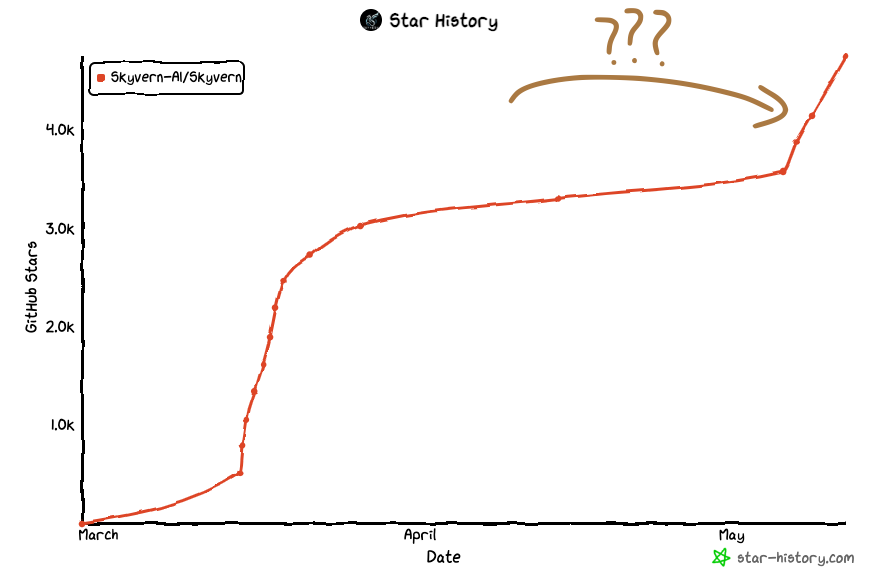 4 min read
Analytics and attribution for an open source project a.k.a story of how we tracked an unexpected burst of traffic
TL;DR: We had a spike of traffic Monday (May 6th) morning, and we looked at our metrics to find out we got featured in a french newsletter and a viral tweet Monday Morning: Random burst of traffic Last Monday morning (May 6th), we woke up to a large burst of traffic to skyvern.com, an influx of Github stars (+1200) in our open source repo, and a burst of new users in our discord (+70) — which led us to scratch our heads.. where did this traffic come from? We hadn’t done any launches, no publi
Suchintan SinghEngineering & Research