
Stagehand Reviews, Pricing, and Alternatives (January 2026)

You need browser automation that works reliably without breaking every time a website changes. Stagehand offers one approach with AI-powered natural language controls, but it comes with specific requirements around external APIs and data privacy. Let's look at how it compares to alternatives across pricing, features, and deployment options.
TLDR:
- Stagehand extends Playwright with AI methods but requires external API calls for each action
- Costs scale with usage due to token charges from models like GPT-4 on every automation run
- Skyvern uses computer vision to automate workflows across hundreds of sites without per-site code
- Built-in 2FA, CAPTCHA solving, and proxy support handle production requirements out of the box
- Skyvern offers open source deployment with transparent pricing and no hidden API fees
What is Stagehand and How Does It Work?
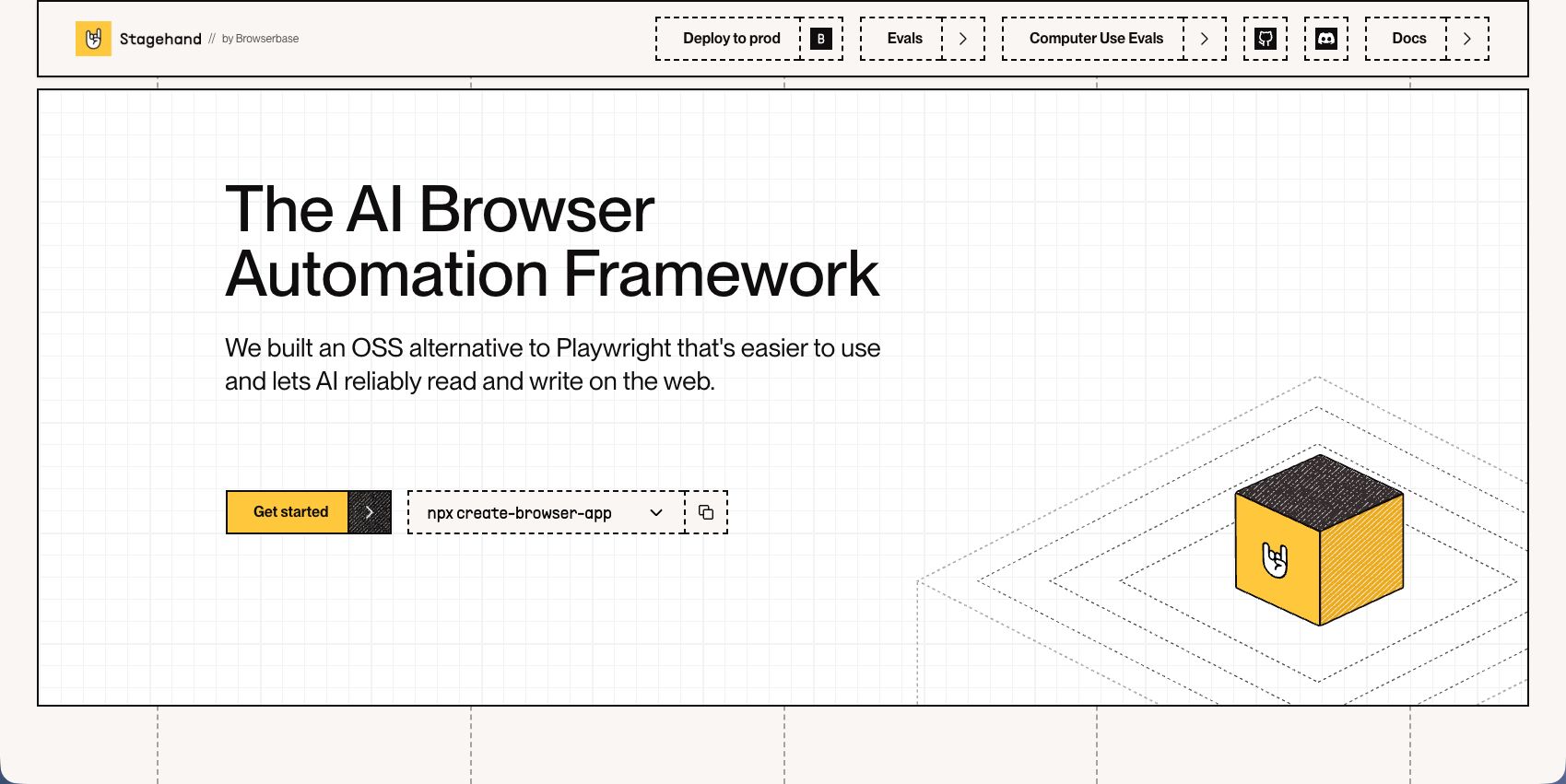
Stagehand is a browser automation framework built on top of Playwright that adds natural language control to web automation scripts. It lets developers write instructions describing what they want to accomplish instead of managing brittle CSS selectors.
The framework provides three AI methods for automation workflows. The act method handles interactions like clicking and form filling through natural language. The extract method pulls specific data from pages based on text instructions. The observe method locates elements and gathers page state information without manual selectors.
Stagehand includes auto-caching and self-healing to reduce repeated LLM calls. After the framework learns how to interact with a site, it caches those actions and runs them without LLM inference. When website layouts change, the system detects the difference and reinvokes the AI to adapt the script. This targets the common issue where automation breaks after website redesigns.
Why Consider Stagehand Alternatives?
There are a number of reasons why teams might want to consider alternatives to Stagehand when looking for browser automation solutions:
- Stagehand requires external AI models for structured output. In addition, local options like Ollama aren't recommended. Teams looking for data privacy or avoiding external API dependencies will find these requirements restrictive.
- Automation costs scale with usage. API calls to models like GPT-4 incur token charges, and while caching helps reduce repeated calls, high-volume workflows across multiple automations increase expenses. Factor in both token costs and latency from external API requests.
- Error handling needs manual implementation. Uncaught errors in act steps don't halt execution unless you explicitly catch them, requiring extensive try-catch blocks that complicate maintenance and debugging.
Stagehand works for developers blending natural language with Playwright code. It's not suitable for organizations needing enterprise infrastructure without AI dependencies, teams requiring offline automation, or businesses wanting built-in 2FA support, CAPTCHA solving, or multi-step workflow orchestration. It's not suitable for organizations needing enterprise infrastructure without AI dependencies, teams requiring offline automation, or businesses wanting built-in 2FA support, CAPTCHA solving, or multi-step workflow orchestration.
Skyvern: Best Overall Alternative
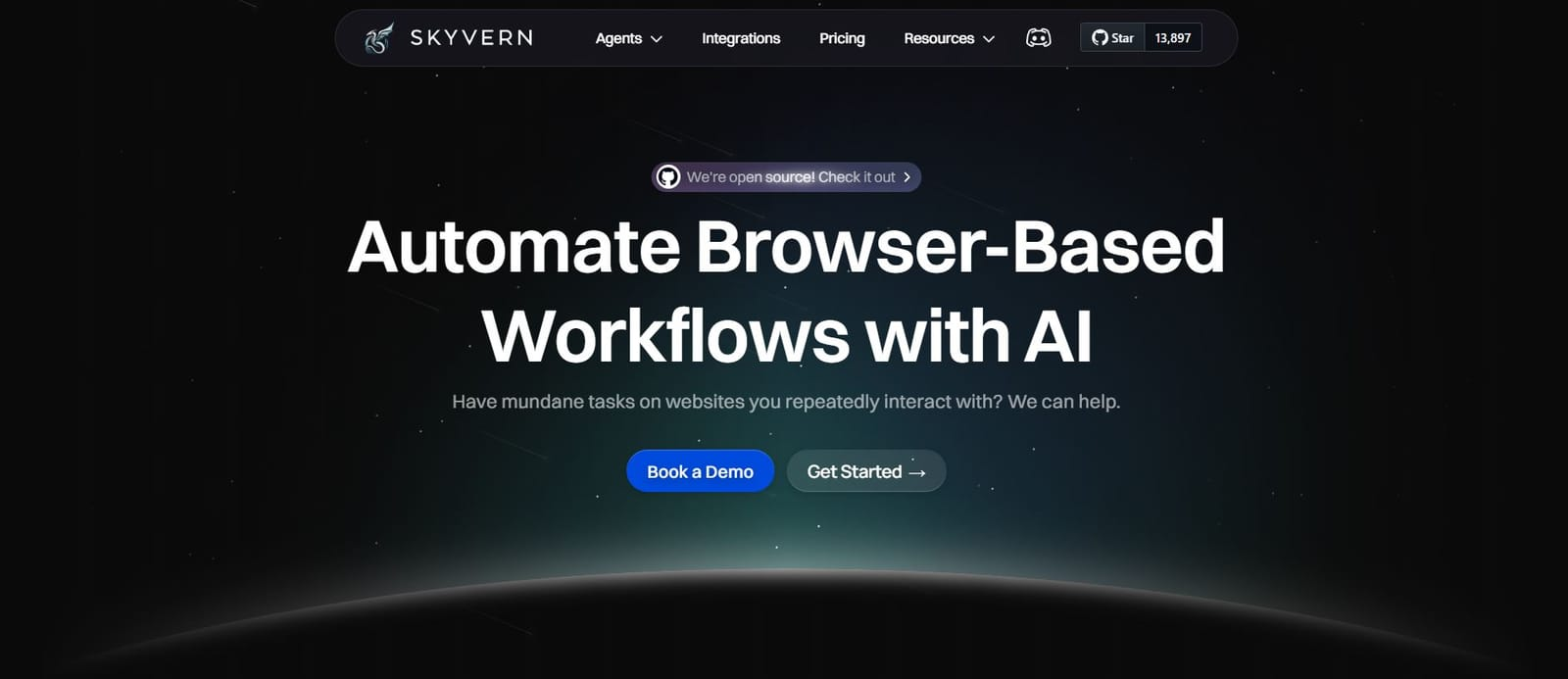
Skyvern is an AI-powered browser automation platform that uses LLMs and computer vision to automate workflows across websites without requiring per-site customization. Unlike Stagehand's approach of extending Playwright with natural language methods, Skyvern operates on unseen websites immediately by understanding pages visually the same way humans do. As business process automation leads AI agent adoption with 64% of deployments, Skyvern's approach aligns with enterprise needs for scalable workflow automation.
The platform eliminates the need to choose between brittle selectors and AI-powered instructions by providing both advanced computer vision and LLM reasoning in a production-ready package.
Key Features
- Computer vision-based automation that works on websites never seen before without pre-written scripts or XPath selectors
- Native production features including 2FA/TOTP support, CAPTCHA solving, and proxy networks with geographic targeting built directly into the platform
- Structured data extraction with schema support for JSON and CSV outputs, plus automatic file downloading with cloud storage
- Self-healing workflows that automatically adapt to website layout changes without manual updates or caching strategies
- Transparent deployment options with both open-source availability and managed cloud service with clear pricing and no hidden API token costs
Limitations
Skyvern requires teams to adopt a computer vision-first approach instead of traditional selector-based automation, which may involve a learning curve for developers accustomed to Playwright or Selenium workflows. The platform is optimized for complex, multi-step workflows across multiple websites instead of simple single-site scripts where traditional tools might be more straightforward. While the open-source version provides core functionality, enterprise features like advanced proxy management and priority support require the managed cloud service.
Bottom Line
Best for: Companies automating workflows across multiple vendor portals, procurement systems, or back-office processes where websites frequently change or lack APIs. Ideal for teams tired of maintaining brittle automation scripts that break with every website update.
Choose Skyvern over Stagehand if you: Need built-in 2FA and CAPTCHA solving, want to avoid scaling token costs from external API calls, require workflows that work across hundreds of websites without per-site configuration, or focus on transparent pricing without hidden fees.
Browserbase
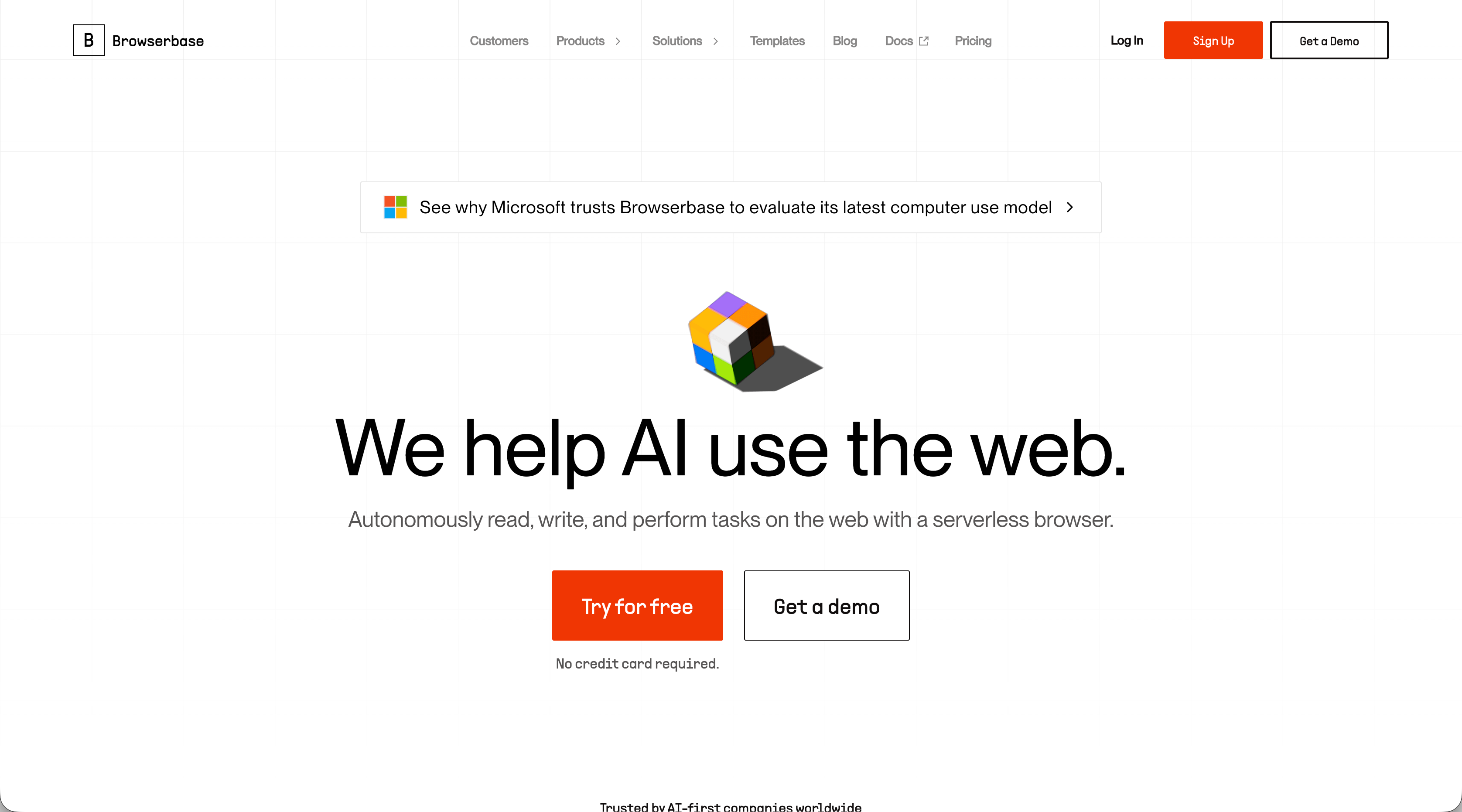
Browserbase provides cloud-hosted headless browsers with stealth mode, CAPTCHA handling, session logging, and autoscaling for agent workloads. They offer managed Chromium instances through a simple API with built-in concurrency, observability features, session recording, and integration with Playwright and Selenium. Unlike Stagehand's AI-powered natural language approach, Browserbase focuses on providing reliable browser infrastructure instead of intelligent automation capabilities.
Key Features
- Managed cloud browser infrastructure with automatic scaling, session management, and built-in stealth mode to avoid detection
- CAPTCHA solving capabilities and anti-bot detection features integrated into the browser environment
- Session recording and debugging tools including live viewport streaming and complete logging for troubleshooting
- Native integration with existing tools like Playwright, Selenium, and Puppeteer without requiring code rewrites
- Concurrent browser management with automatic resource allocation and cleanup for high-volume automation workloads
Limitations
Browserbase provides infrastructure but lacks AI-powered automation capabilities, requiring teams to build their own intelligence layer for understanding pages and adapting to changes. The platform doesn't include native form filling logic, workflow orchestration, or computer vision features that handle unseen websites automatically. Teams still need to write and maintain selector-based scripts that can break when websites change their layouts.
Bottom Line
Best for: Development teams that already have automation scripts written in Playwright or Selenium and need reliable, scalable browser infrastructure without managing their own servers. Ideal for companies wanting to offload browser hosting complexity while maintaining full control over automation logic.
Choose Browserbase over Stagehand if you: Need infrastructure-as-a-service for existing automation scripts, want to avoid external AI API dependencies entirely, require deep integration with traditional automation frameworks, or prefer building custom intelligence layers instead of using pre-built AI capabilities.
CloudCruise
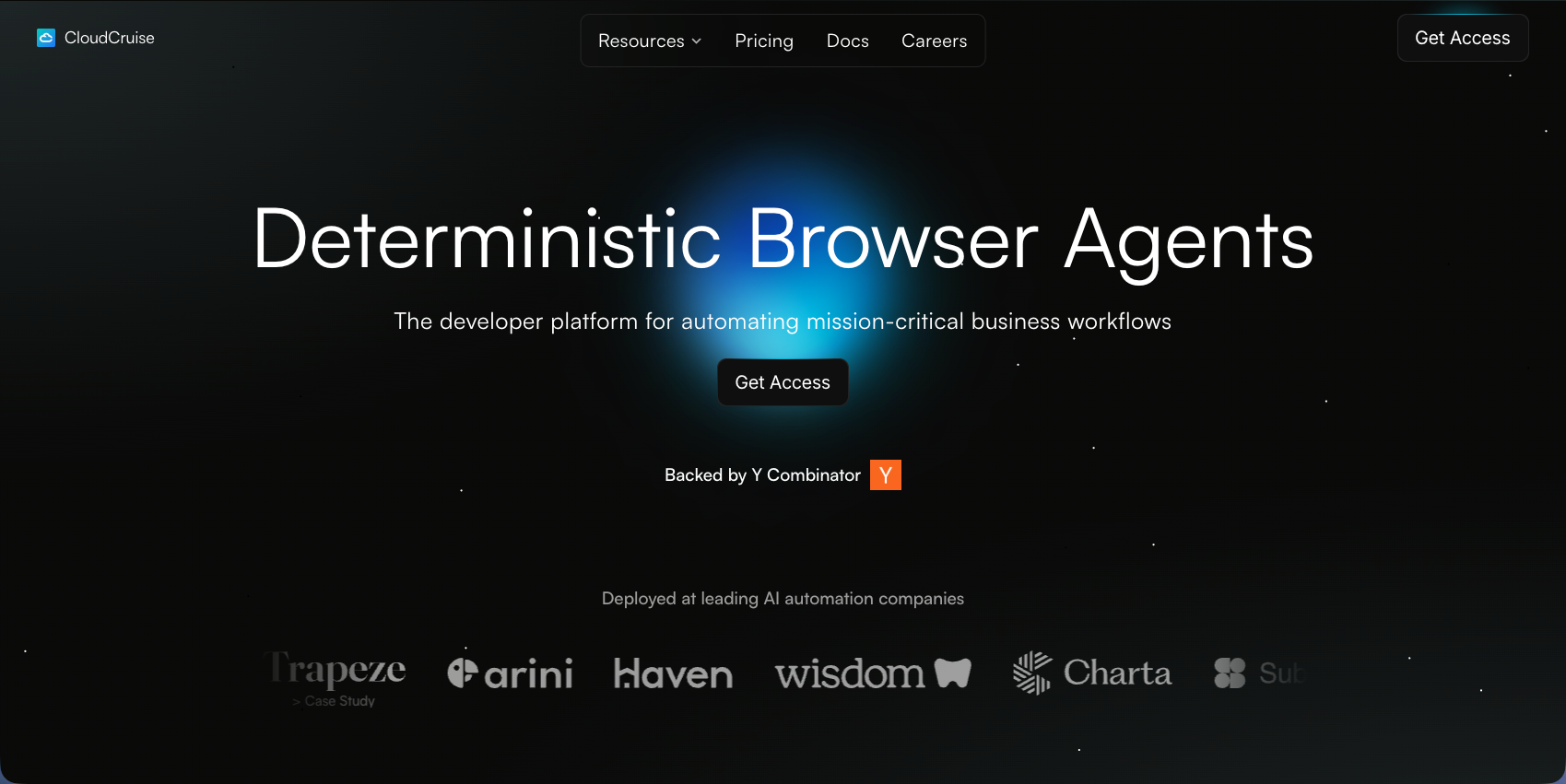
CloudCruise lets you design workflows once, trigger them over API, and automatically repairs issues to keep them running. They offer BADGER workflow DSL built around explicit graphs of browser actions, automatic workflow repair, and API-based triggering. Unlike Stagehand's natural language approach, CloudCruise uses a graph-based workflow approach that requires upfront design but provides structured automation with self-healing capabilities.
Key Features
- Graph-based workflow DSL (BADGER) that defines browser actions as explicit nodes and edges for structured automation design
- Automatic workflow repair that detects and fixes broken automations when websites change without manual intervention
- API-based workflow triggering for integration into existing systems and scheduled execution
- Visual workflow designer that lets teams map out complex multi-step processes before deployment
- Built-in monitoring and alerting that tracks workflow health and notifies teams of issues requiring attention
Limitations
CloudCruise requires learning a new workflow approach with graph-based design instead of writing traditional scripts or using natural language instructions. The platform needs more upfront workflow design compared to solutions that operate on unseen websites immediately, making it less suitable for ad-hoc automation needs. Pricing starts at $60/month for 10 workflows and 30 browser hours, which may not scale cost-effectively for teams running hundreds of different automations.
Bottom Line
Best for: Teams that want structured, repeatable workflows with automatic repair capabilities and prefer explicit workflow design over AI-powered natural language instructions. Ideal for companies with a defined set of critical automations that need reliable execution and self-healing.
Choose CloudCruise over Stagehand if you: Prefer graph-based workflow design over natural language instructions, need automatic repair without relying on external AI APIs, want visual workflow mapping for team collaboration, or require structured automation with clear execution paths.
Airtop
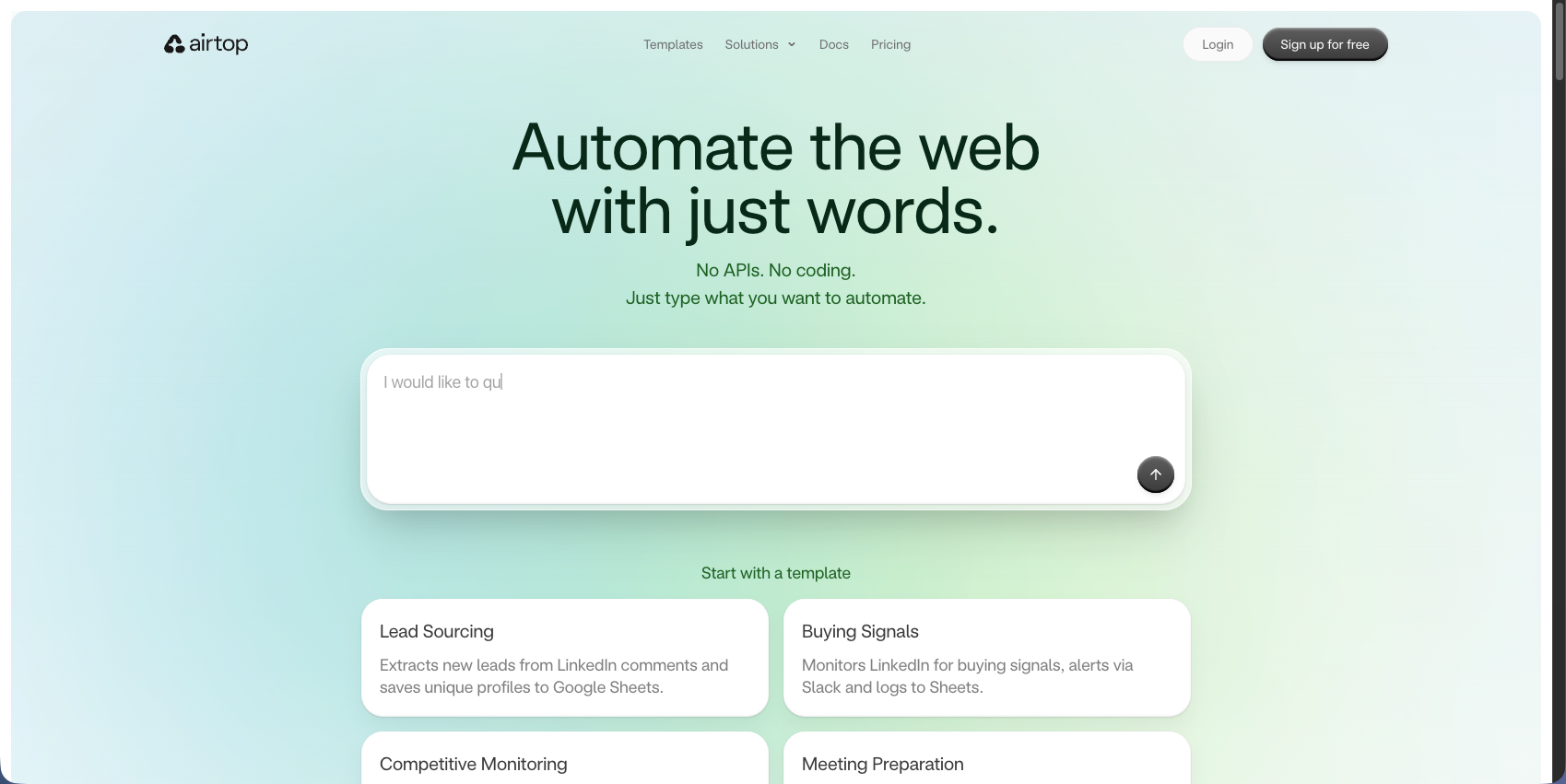
Airtop creates AI agents through natural language descriptions with no code, workflows, or APIs. They offer conversational command interface, cloud browser automation, and authentication handling including OAuth and 2FA. Unlike Stagehand's developer-focused Playwright extension, Airtop targets non-technical users with a conversational interface for building browser automations.
Key Features
- Natural language agent creation that builds browser automations through conversational descriptions without writing code
- Built-in authentication handling including OAuth and 2FA support for accessing protected resources
- Cloud-based browser infrastructure with managed execution environment and automatic scaling
- Conversational command interface that lets users describe tasks in plain English instead of learning automation syntax
- No-code automation deployment allow business users to create and run browser workflows without developer involvement
Limitations
Airtop's conversational approach may lack the precision and control that developers need for complex multi-step workflows compared to code-based solutions. Region-locked authentication causes failures when proxies don't match site requirements, and they lack visual understanding for handling complex layouts. The platform is optimized for simpler automations instead of sophisticated workflows requiring conditional logic, data transformation, or integration with existing systems.
Bottom Line
Best for: Non-technical business users who need simple browser automations without learning to code and prefer describing tasks conversationally. Ideal for teams wanting quick deployment of straightforward workflows like form filling or data collection without developer resources.
Choose Airtop over Stagehand if you: Have non-technical users who need to create automations, prefer conversational interfaces over writing code, want built-in authentication without manual implementation, or need rapid deployment of simple workflows without learning Playwright.
Browse AI
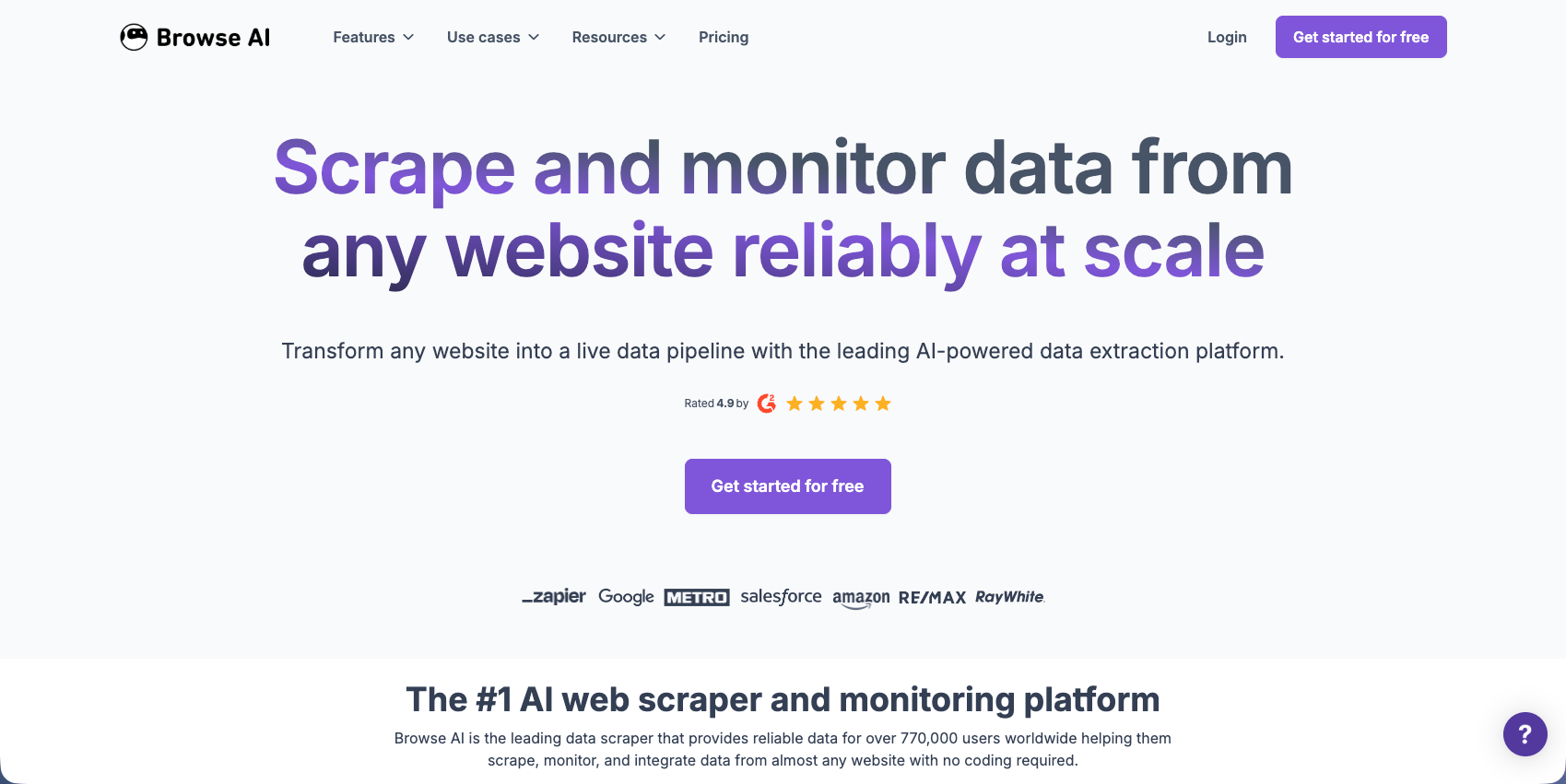
Browse AI extracts and monitors website data without code by training robots to scrape in bulk or on schedules. They generate hundreds of selectors per element to adapt to website changes, with scheduled monitoring, bulk runs up to 1,000 tasks, and API integrations. Primarily focused on data extraction instead of interactive automation, relying on selector-based approaches that break with major website changes.
Key Features
- No-code data extraction that lets users train robots by clicking on elements they want to scrape without writing selectors
- Multiple selector generation creating hundreds of selectors per element to maintain functionality when websites change layouts
- Scheduled monitoring and bulk runs supporting up to 1,000 concurrent tasks with automatic data collection on defined intervals
- Pre-built robots for popular sites offering ready-made extractors for common platforms like LinkedIn, Amazon, and Google Maps
- API and integration support allow automated data delivery to spreadsheets, databases, and other business tools
Limitations
Browse AI works for straightforward data scraping but cannot handle complex form filling, authentication workflows, or multi-step interactive processes that require decision-making. The selector-based approach, despite generating multiple selectors, still breaks with website redesigns that change underlying HTML structure. The platform is optimized for extraction instead of automation, making it unsuitable for workflows requiring actions beyond data collection.
Bottom Line
Best for: Teams needing simple, scheduled data extraction from websites without APIs, particularly for monitoring competitor pricing, product listings, or public data sources. Ideal for business users who want to collect data regularly without writing code or managing complex automation scripts.
Choose Browse AI over Stagehand if you: Only need data extraction without interactive automation, prefer no-code robot training over writing Playwright scripts, want pre-built extractors for popular websites, or require scheduled monitoring with automatic data delivery to business tools.
Axiom
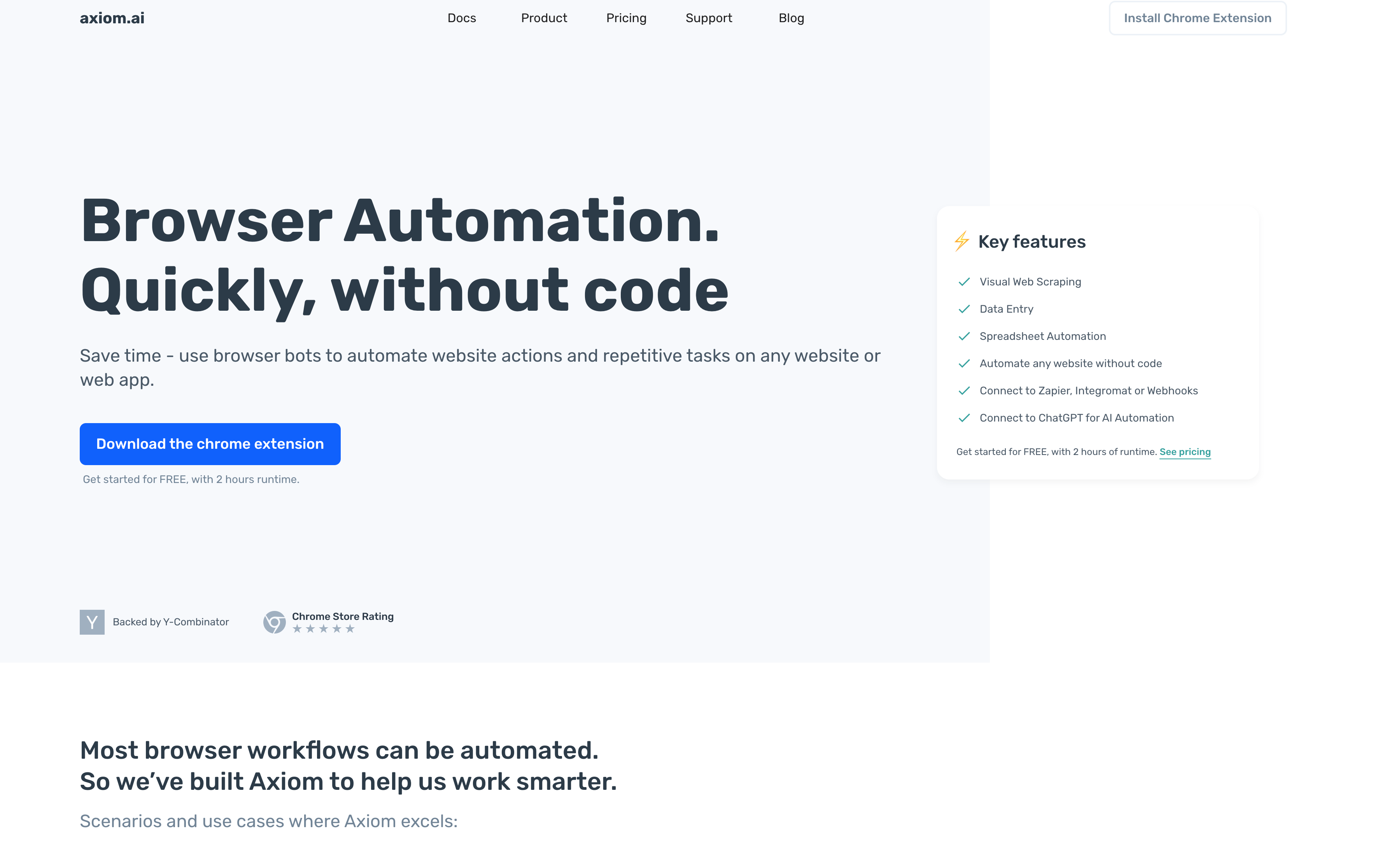
Axiom automates repetitive work by recording clicking and typing actions in your browser. They offer point-and-click bot building through a Chrome extension, with visual workflow design, scheduled runs, and integration capabilities. Unlike Stagehand's AI-powered approach, Axiom uses traditional recording and playback methods that require users to manually define each step of their automation.
Key Features
- Browser-based recording that captures clicks and typing actions directly in Chrome without writing code
- Visual workflow builder with drag-and-drop interface for designing multi-step automation sequences
- Scheduled execution and triggers allow automations to run at specific times or based on defined conditions
- Data extraction and export with support for spreadsheets and integration with tools like Google Sheets and Zapier
- Template library providing pre-built automations for common tasks like form filling and data scraping
Limitations
Axiom relies on recorded actions that break when websites change their layouts, requiring manual re-recording and maintenance. The platform lacks AI capabilities to understand pages contextually or adapt to variations in website structure automatically. Recording-based automation is limited to repetitive, predictable workflows and struggles with dynamic content or complex decision-making scenarios.
Bottom Line
Best for: Individual users and small teams needing simple, repetitive browser automations like form filling or data entry without technical expertise. Ideal for business users who want quick setup through recording instead of learning programming or complex automation frameworks.
Choose Axiom over Stagehand if you: Prefer visual recording over writing code, need simple automations that don't require AI understanding, want a Chrome extension that works directly in your browser, or require quick setup for straightforward repetitive tasks.
Feature Comparison: Stagehand vs Top Alternatives
The table below compares Stagehand with top alternatives across key automation features:
Feature | Stagehand | Skyvern | Browserbase | CloudCruise | Airtop | Browse AI | Axiom |
|---|---|---|---|---|---|---|---|
AI-Powered Automation | Yes | Yes | No | Yes | Yes | Limited | No |
Computer Vision | No | Yes | No | No | No | No | No |
Works on Unseen Websites | Limited | Yes | No | Limited | Limited | No | No |
Native Form Filling | Yes | Yes | No | Yes | Yes | Limited | Yes |
2FA/TOTP Support | Limited | Yes | No | No | Yes | No | No |
CAPTCHA Solving | No | Yes | Yes | No | Yes | Yes | No |
API Endpoint | No | Yes | Yes | Yes | Yes | Yes | Yes |
Proxy Support | No | Yes | Yes | Yes | Yes | Yes | No |
Open Source | Yes | Yes | No | No | No | No | No |
No-Code Interface | No | No | No | No | Yes | Yes | Yes |
Stagehand and Skyvern both offer AI-powered automation, but Skyvern adds computer vision to handle changing layouts and sites it's never seen before. Browserbase provides infrastructure without AI capabilities. Browse AI and Axiom target specific workflows like data extraction and recording.
Why Skyvern is the Best Stagehand Alternative
Skyvern solves the challenge of scrapping websites with different layouts with a computer vision approach. Write one workflow that works across hundreds of websites without per-site customization. Where Stagehand requires choosing between selectors and natural language instructions, Skyvern understands pages visually from the start. When websites change their layouts, workflows adapt automatically without manual updates or caching strategies.
Production requirements like 2FA, CAPTCHA solving, proxy networks with geographic targeting, and structured data extraction are built in. You're not assembling multiple tools or building authentication workarounds.
Skyvern offers transparent pricing and flexible deployment options including open source. 73% of companies increased automation spend in 2025, with 36.6% reporting cost reductions of at least 25% and 12.7% achieving more than 50% cost reduction, demonstrating proven ROI from automation investments. Automate invoice downloads, materials procurement, or form filling across vendor portals without configuration scripts for each site.
Final Thoughts on Browser Automation Alternatives to Stagehand
The right Stagehand alternative depends on your automation requirements and infrastructure preferences. Stagehand extends Playwright with AI methods, but you'll handle authentication, CAPTCHA solving, and proxy management separately. Computer vision approaches like Skyvern work across hundreds of websites without per-site scripts, while no-code tools like Browse AI and Axiom target specific extraction workflows.
FAQ
When should you consider moving away from Stagehand?
Consider switching if you need offline automation without external API dependencies, want to avoid scaling token costs across high-volume workflows, or require built-in 2FA support and CAPTCHA solving without manual implementation.
What features should you focus on first when comparing Stagehand alternatives?
Look for computer vision capabilities that adapt to layout changes, native support for authentication methods like 2FA and TOTP, built-in CAPTCHA solving, and the ability to work across multiple websites without per-site customization.
How does Skyvern handle website changes differently than Stagehand?
Skyvern uses computer vision to understand pages visually from the start, adapting automatically when layouts change without requiring caching strategies or manual selector updates that Stagehand needs.
Can Stagehand alternatives work on websites they've never seen before?
Skyvern can operate on unseen websites immediately using visual understanding, while most alternatives including Stagehand require some level of training, recording, or per-site configuration before automation works reliably.
What's the main cost difference between Stagehand and managed alternatives?
Stagehand incurs per-token API costs that scale with usage and LLM calls, while managed alternatives like Skyvern offer transparent monthly pricing that includes AI capabilities, infrastructure, and features like proxy networks without hidden token charges.