
Automating Healthcare Claims, EOB Processing, and Billing on Payer Portals in February 2026

Traditional automation breaks the moment a payer portal gets a redesign. Your team either maintains brittle scripts for each of the dozen portals you work with, or you stick with manual downloads. Automating EOB processing with computer vision removes this maintenance burden entirely by recognizing interface elements visually instead of through fragile XPath selectors that need constant updating.
TLDR:
- Healthcare teams waste 15-20 minutes per EOB on manual portal logins and data entry
- AI-powered automation cuts error rates from 8-12% down to under 2% in claims processing
- Days in accounts receivable drop 50-65% when payments post in hours instead of weeks
- Skyvern automates EOB retrieval across any payer portal using computer vision and LLMs
What Is EOB Automation and Why Healthcare Organizations Need It
An Explanation of Benefits (EOB) is a document that payers send to healthcare providers after processing a claim. It breaks down what was billed, what the insurance covered, what the patient owes, and any claim denials or adjustments. Healthcare organizations process thousands of these documents every month, and each one requires manual review, data entry, and reconciliation against billing records.
EOB automation refers to using browser automation software to automatically retrieve, extract, and process data from these documents without human intervention. Instead of staff logging into multiple payer portals, downloading PDFs, and manually entering payment information into billing systems, automated workflows handle the entire process from retrieval to posting.
The need for this automation has become critical. Manual EOB processing ties up revenue cycle teams in repetitive tasks that delay payment posting and create bottlenecks in accounts receivable. When payments sit unposted for days or weeks, it directly impacts cash flow and makes it harder to identify underpayments or denials that need follow-up.
The Hidden Cost of Manual EOB Processing
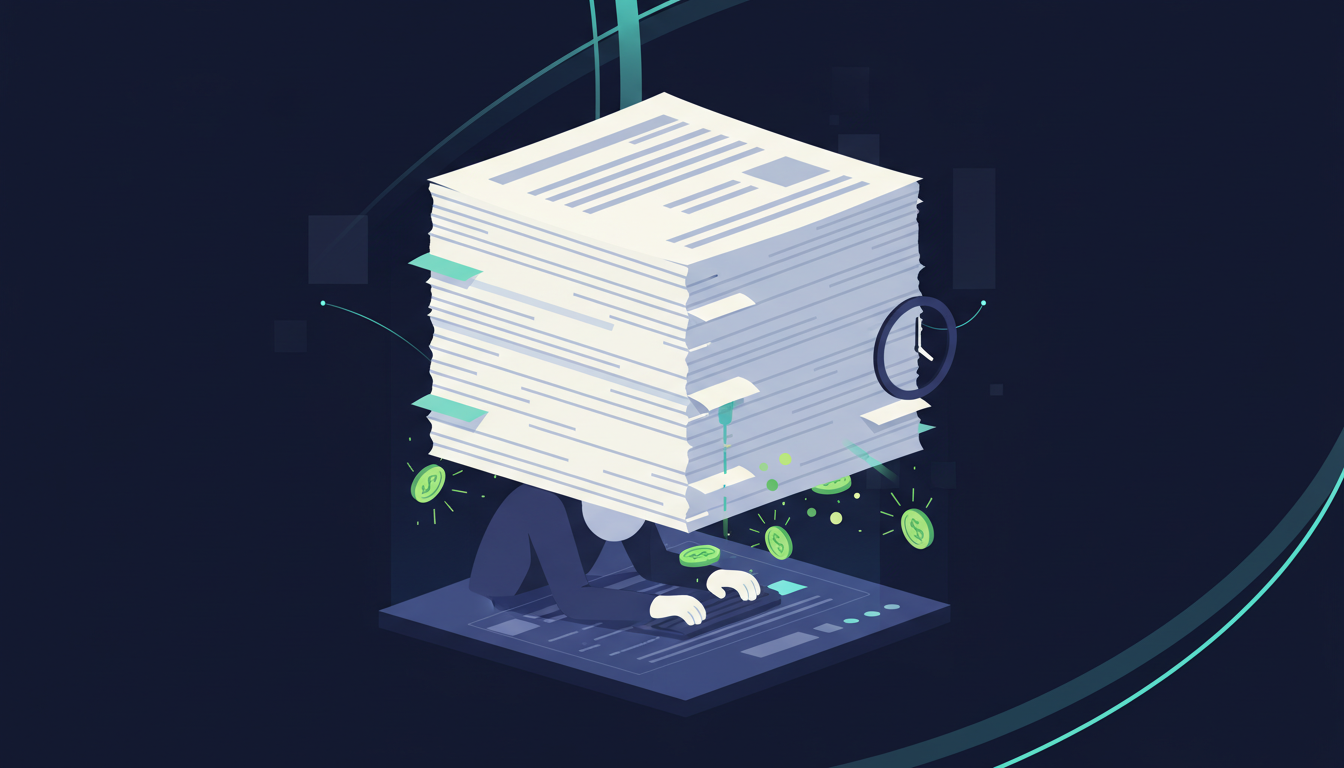
The financial drain from manual EOB processing extends far beyond labor costs. Manual claims processing leads to average denial rates of 10-15%, with each denied claim costing between $25-$50 in administrative overhead to rework and resubmit. For organizations processing thousands of claims monthly, these costs compound quickly.
Data entry errors create even larger financial losses. 80% of medical bills contain errors, costing healthcare providers approximately $125 billion annually. When staff manually key in payment amounts, adjustment codes, and patient responsibility figures from EOB documents, mistakes are inevitable. A single transposed digit can result in incorrect patient statements, delayed collections, or missed underpayments.
Reconciliation creates another bottleneck. Staff must match each EOB line item to the corresponding claim in the billing system, verify payment amounts against expected reimbursement, and research discrepancies. This process can take 15-20 minutes per EOB when payments cover multiple dates of service or include complex adjustment codes.
How EOB Automation Technology Works
EOB automation systems combine document processing, data extraction, and reconciliation to eliminate manual retrieval and data entry. The workflow starts when an EOB arrives as a PDF or scanned image. OCR converts the document into machine-readable text, identifying key fields like claim numbers, service dates, billed amounts, allowed amounts, and patient responsibility across different payer formats.
Extraction tools then pull relevant data points and map them to structured fields, outputting information in formats like JSON or CSV that billing systems can consume. This handles variations in EOB layouts across payers without custom templates for each one.
Extracted data flows into practice management or billing systems where it matches against open claims, compares expected reimbursement to actual payment, flags discrepancies, and posts payments to patient accounts through APIs or direct database connections.
The Payer Portal Challenge: Why Traditional Automation Fails
Traditional automation tools like Selenium and Playwright rely on hardcoded element selectors that break when payer portals update their interfaces, a problem that common automation mistakes can help you avoid. A moved button or renamed field stops the entire workflow until developers manually fix the code. This creates major problems for healthcare organizations working with dozens of payer portals. Each portal from UnitedHealthcare, Aetna, Blue Cross Blue Shield, and regional payers has unique layouts, requiring the same document retrieval strategies used for invoice downloads. Teams must build and maintain separate scripts for every single payer they work with.
Different authentication methods also make things worse. Security questions, two-factor authentication, and CAPTCHA challenges vary by portal. Navigation patterns differ just as much, with claims and EOB downloads buried behind different menu structures and filters at each site.
The result? Revenue cycle teams either hire developers for constant script maintenance or give up on automation entirely.
AI-Powered EOB Processing: The Next Generation Approach
AI changes the EOB automation equation by removing the need for pre-defined selectors and templates. Computer vision analyzes visual layouts to identify buttons, fields, and data tables regardless of where they appear on the page. The system recognizes what a login button or claims table looks like visually, not simply where it sits in the HTML structure. LLMs add reasoning capabilities that traditional automation lacks. When encountering security questions, multi-step workflows, or conditional logic, these systems can interpret instructions and make decisions about next steps. If a portal asks "What was your first pet's name?" the system retrieves the stored security answer and continues the workflow. This flexibility improves accuracy. AI systems reduce error rates from 8-12% down to under 2% when processing EOB data. The improvement comes from understanding context instead of just pattern matching. Maintenance drops when payers update their portal interfaces since computer vision adapts to new layouts without code changes.
Real-World Benefits: What Healthcare Organizations Achieve with EOB Automation
Healthcare organizations implementing EOB automation report measurable improvements across revenue cycle operations. One organization achieved error-free posting of $20 million through automated workflows, with processing speeds 10-15 times faster than manual methods. First-pass approval rates exceeded 97%, removing the rework cycles that previously delayed payment posting.
Financial metrics show the clearest impact. Days in accounts receivable drop by 50-65% when payments post within hours instead of weeks, joining other automated workflows that reduce processing time. Administrative costs fall 30-45% as staff shift from data entry to exception handling and denial management. Processing speed increases of 6x let three-person teams handle workloads that previously required 15-18 people. The key benefit across the board is that reconciliation happens in near real-time instead of month-end batch processing. Teams close their books faster, identify underpayments immediately, and work denials while appeals are still timely.
Automating Multi-Portal EOB Retrieval with Browser-Based Workflows
Browser-based workflows treat each payer site as a visual interface instead of code requiring custom integration. A single workflow definition logs into UnitedHealthcare, Availity, Cigna, and BCBS portals, navigates their varied layouts, and downloads EOBs without building separate scripts for each system. The workflow manages authentication variations on its own. When portals require 2FA codes or present CAPTCHA challenges, computer vision identifies these elements and processes CAPTCHA challenges without pausing the workflow. Security questions receive answers from stored credentials, and session management maintains continuity across multiple pages.
Retrieved EOBs match to AR reports through claim numbers and service dates, normalizing data across payer formats into consistent outputs. One organization used this method to process tens of thousands of claims across a dozen payers in days, replacing weeks of manual retrieval.
Skyvern for Healthcare: Automating EOB Processing Across Any Payer Portal
Skyvern automates EOB retrieval workflows across any payer website using computer vision and LLMs. A single workflow definition pulls EOBs from UnitedHealthcare, Aetna, Cigna, and regional payers without portal-specific code. When sites redesign their interfaces, your workflows continue running because Skyvern recognizes buttons and forms by appearance instead of fragile XPath selectors. The system handles 2FA codes, CAPTCHA challenges, security questions, file downloads to cloud storage, and multi-step navigation without manual intervention. Structured data extraction outputs clean JSON or CSV that integrates directly with your practice management system through our API, similar to other AI RPA platforms.
Healthcare teams using Skyvern have cut follow-up lag times from 120 days down to 11 days by automating tasks that previously required dedicated staff. Start with our managed cloud version or deploy the open-source option for internal hosting.
Final Thoughts on Healthcare Payment Automation
Manual EOB processing creates a bottleneck that slows down your entire revenue cycle. When you automate EOB processing with tools that handle any payer portal, your payments post faster, your staff shift from data entry to denial management, and your cash flow improves without adding headcount. Schedule time to see it in action with your actual payer workflows. The improvements in days in AR and posting accuracy show up in your first month.
FAQ
How long does it take to implement EOB automation?
Most healthcare organizations can deploy browser-based EOB automation in 2-3 weeks, including workflow configuration, credential setup for payer portals, and integration with your practice management system.
What happens when payer portals change their website layouts?
AI-powered automation using computer vision recognizes buttons and forms by appearance instead of code-based selectors, so workflows continue running when portals redesign their interfaces without requiring manual updates or developer intervention.
Can EOB automation handle different authentication methods across payer portals?
Yes, modern automation handles 2FA codes, CAPTCHA challenges, and security questions across different payer portals within a single workflow, eliminating the need to build separate scripts for each authentication method.
What error rate should I expect with automated EOB processing?
AI-based EOB processing systems reduce error rates from the 8-12% typical with manual data entry down to under 2%, with some organizations achieving 97% first-pass approval rates on posted payments.
How many staff members do I need to manage automated EOB workflows?
Teams of 3-4 people can handle workloads that previously required 15-18 staff members with manual processing, with processing speeds improving by 6-10x after automation implementation.