Browser Use vs Stagehand: Which One Should You Pick?

Browser Use and Stagehand both let you use AI to automate browser tasks, such as collecting product data or filling out forms.
When you’re deciding which to build with, their feature lists only tell you so much. You want to know how much code you’ll need to write, whether the automation completes your task correctly, and what repeated runs will cost.
I'll be upfront: we build Skyvern, a competitor to both, but this blog post won't shill our product (you can try it here though). I’m keeping this comparison focused on helping you choose between Browser Use and Stagehand, from setting up your first task to running it repeatedly.
Quick verdict
Browser Use is a better fit when you want an agent to choose the browser steps. You describe the result you need, such as a list of product prices, and the agent decides how to get it.
Stagehand is a better fit when you want to control the steps in code. You choose when to navigate, extract information and check a result before continuing.
What matters to you | Browser Use | Stagehand v4 |
|---|---|---|
Who chooses the next step? | The agent follows your task instructions | Your application code controls the sequence |
What runs in the cloud? | The hosted agent and browser | Browserbase hosts the browser; you run the script |
Can you keep existing Playwright code? | The separate Cloud Browser service hosts the browser for your script | Moving it to Stagehand requires a port |
What can you reuse? | Scripts saved by the Cloud agent | Your script and, on Browserbase, cached model responses |
Languages
Both tools support Python and TypeScript, so language alone won't decide between them. Stagehand also has a Go SDK.
- Python: Browser Use's open-source library runs the agent in your Python process. Stagehand lets you write the browser sequence yourself and use AI for individual actions or extraction.
- TypeScript: Browser Use's Cloud client submits tasks to a hosted agent. Stagehand runs the workflow you write in your application. Neither hosted setup requires a separate Python service.
- Go: Stagehand lets you write navigation and result checks in Go. Browser Use's documented Cloud clients are Python and TypeScript.
Existing Playwright code
Browser Use's Cloud Browser service is the easier option if you already have a working Playwright script and only need somewhere to run the browser. It hosts the browser without adding an agent. Your code connects through Chrome DevTools Protocol (CDP), the interface software uses to control Chromium.
Stagehand v4 also uses CDP, but moving from Playwright requires code changes. You cannot pass a Playwright Page to Stagehand's act() method, which performs actions from plain-language instructions. You also need replacements for Playwright's automatic waits and assertions.
Browser control
Browser Use reads the page, chooses an action and checks the updated page before deciding what to do next. For the book task we tested, you can ask for titles and prices and let the agent find them.
With Stagehand, you write that sequence. Its act() method handles an instructed action, and extract() reads information from the page. Your code decides which method to call and what happens after it returns. That gives you a direct place to check a price or reject a missing field before continuing.
In short, Browser Use doesn't require you to write each browser step and Stagehand gives you more explicit control between steps, with more workflow code to maintain.
Testing Stagehand vs Browser Use
To compare them properly, we ran a small test with both.
What we tested
We used Books to Scrape, a public scraping demo, for two read-only tasks:
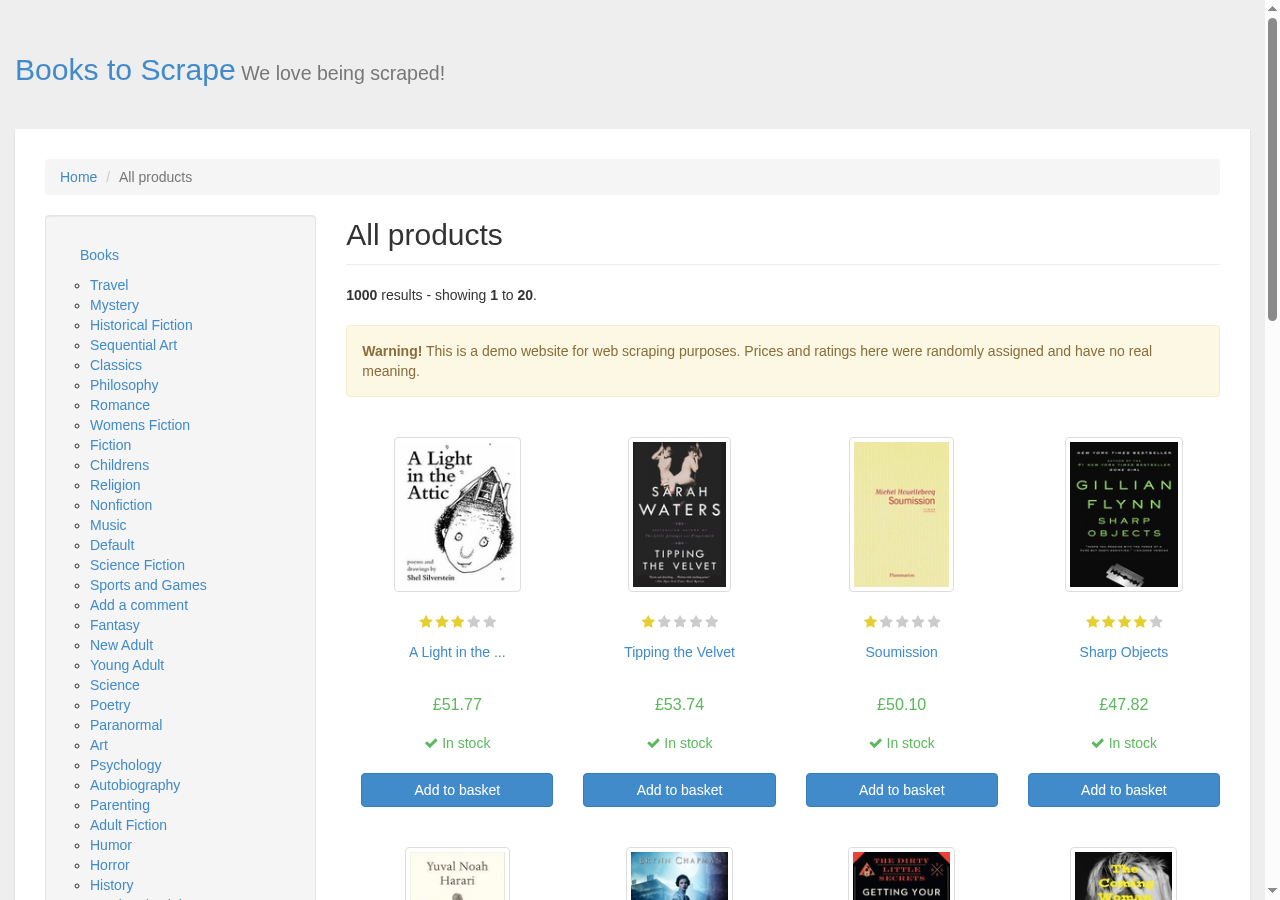
- Catalog: Return the first five books in displayed order, with full title, GBP price and absolute product URL. Each run had 15 required fields.
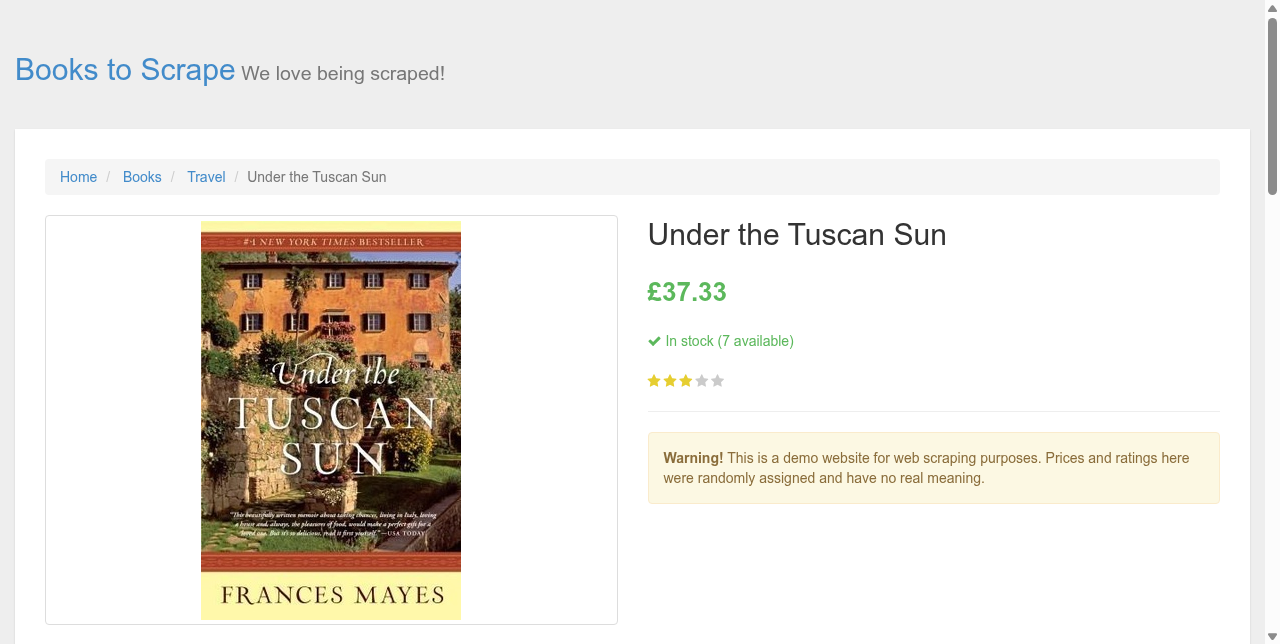
- Travel details: Open the Travel category and visit its first five product pages in category order. Return the same fields plus stock count and UPC product identifier, for 25 required fields per run.
Test setup
Browser Use received the instructions through a Python program and chose the browser steps. Stagehand followed our TypeScript script: extract the catalog, or open Travel and visit its first five books. Both had to return every field correctly and keep the books in the same order as independent page snapshots.
Test date
The latest tests ran on September 14–15, 2026. Browser Use Cloud V4 used gpt-5.6-luna; Stagehand 4.0.2 used openai/gpt-5.6-luna through Browserbase. Both configurations used the same model label, though that does not establish identical upstream model revisions, prompts or execution settings.
Test Results
Browser Use returned correct results in all six runs. Stagehand completed three and stopped on invalid book links in the other three. Browser Use was more reliable in this test, while Stagehand's two successful catalog runs were faster than Browser Use's catalog median.
We ran each task three times per tool. Times are in seconds. Each median uses successful runs with complete timings; it is the middle time, or the average of the two middle times. Our code allowed three minutes for success, with cancellation or deadline checks at 165 seconds.
Task and tool | Correct outputs | First | Repeat 1 | Repeat 2 | Median of successful runs |
|---|---|---|---|---|---|
Catalog: Browser Use | 3/3 | 21.16 | 14.73 | 19.59 | 19.59 (n=3) |
Catalog: Stagehand | 2/3 | URL error | 15.21 | 12.41 | 13.81 (n=2) |
Travel: Browser Use | 3/3 | Time unavailable | 25.34 | 16.83 | 21.08 (n=2) |
Travel: Stagehand | 1/3 | 37.75 | URL error | URL error | 37.75 (n=1) |
Where Stagehand failed
Stagehand's three successful runs returned all 55 required fields correctly. The other three stopped because a book link failed its URL check:
Failed run | Rejected link | Elapsed time, including cleanup |
|---|---|---|
Catalog, first run | First book: | 15.80 seconds |
Travel, first repeat | First link: | 22.43 seconds |
Travel, second repeat | Fourth link: | 17.10 seconds |
These runs scored zero because no book records made it through the checks. That doesn't mean every value Stagehand found was wrong. The failed-run times include cleanup after the error and don't count toward the medians.
We used the same Stagehand script and data checks for every Luna run, with result caching turned off. We kept all three failures and did not fix or rerun them. The results showed no timeout errors.
Stagehand completed its two successful catalog runs in 15.21 and 12.41 seconds, compared with Browser Use's 19.59-second median. Its third catalog run failed. Each timer also includes different startup and progress-checking work, so these results do not measure the speed of the frameworks alone.
Costs of the test
Our tests used free credits and allowances. Here is the usage we recorded:
- Browser Use: About 3.5 cents in reported costs for the six Luna runs. The account's credit balance fell by about 12 cents over the wider test and recovery period. These measure different usage and should not be added together.
- Stagehand on Browserbase: The dashboard's model spend rose from $0.11 to $0.13, an increase of about 2 cents during the six-session test. This is a rounded account total, not an exact bill for those sessions. Some failed calls had no usage details, so we could not total their model charges separately.
Repeated runs
Browser Use Cloud can save a working script and run it again to fetch fresh data. It can also repair the script when the site changes. Each later run still starts a model and uses tokens.
Stagehand runs the script you wrote. On Browserbase, its optional result cache can reuse a model response when the instruction, page content and options match. This skips the model call and its token cost, although browser charges can remain. The cache does not work with a local browser.
Browser Use's script reuse automates writing and maintaining repeated steps. Stagehand's result cache avoids repeating matching model calls inside your script. Saving a login is separate from either feature.
We turned Stagehand's cache off and did not test Browser Use's saved scripts. The faster repeat runs therefore do not show savings from either feature.
Other considerations
Here are other points regarding both solutions you might want to look at before chosing.
Hosting
Browser Use Cloud runs both the agent and browser.
Stagehand on Browserbase leaves the workflow script running in your application while Browserbase hosts the browser.
Browser Use is simpler to deploy when you want a hosted agent while Stagehand fits when you want the browser steps to stay in your application code.
Debugging
With Browser Use, run events show what the model and browser tools did. They help you follow the agent's decisions when it chooses the steps itself.
With Stagehand, you can start at the failed call in your script, then inspect Browserbase recordings and logs. In our tests, the errors identified the book-link fields that failed validation. That gave us a specific output check to investigate, although the script still needed a way to handle the failure.
Logins and CAPTCHAs
Both hosted options can reuse a saved login. Browser Use stores browser data in a profile; Browserbase stores it in a Context for Stagehand. Both save cookies, and both need a fresh login when the website expires the session.
Automatic CAPTCHA solving differs by plan. Browser Use Cloud V4 includes it, while Browserbase offers it on paid plans. Neither guarantees access to your target site.
Conclusion
I'd choose Browser Use for the extraction tasks we tested. It returned complete, correct results in all six runs, while Stagehand's script stopped on three invalid links. I'd choose Stagehand when I need explicit checks between browser actions and am prepared to write the sequence and failure handling.
Keep reading
Browser Use vs Browserbase: my honest comparison
Browserbase and Browser Use can both automate work in a browser, from collecting product data to filling out forms. Choosing between them comes down to what you want to build: a task you hand to an AI agent, a custom agent inside your application, or browser infrastructure for scripts you already run. I’m Skyvern’s co-founder and CEO by the way. We build a competing product, so I have a stake in this comparison. But I promise I won't promote our product (even though it's a great alternative to
6 Stagehand alternatives for browser automation in 2026
If you're looking for Stagehand alternatives, you probably want an AI browser agent that: * Works natively with Python scripts. * Can navigate and scrape complex websites efficiently. * Stays reliable as your workload grows from a few runs to thousands of browser jobs. That's the kind of workflow I built Skyvern for (Skyvern CEO here). I know, I know, Skyvern CEO's recommending Skyvern as a good alternative. Please just stay with me for a second here. Yes, Skyvern is a good Stagehand alt
Skyvern vs Browser Use for Browser Automation
If your team spends hours moving between portals, downloading invoices or filling out the same forms, you probably already know what you want to automate. Choosing between Skyvern and Browser Use comes down to how you’ll build it and who on your team will keep it running. I’m Suchintan, Skyvern’s co-founder and CEO. We built Skyvern with enterprise teams in healthcare, finance and insurance in mind. Their process experts often aren’t developers, and I think they should be able to automate the w
Put the browser to work
Use Skyvern for the work that lives in a browser.
Turn repetitive browser tasks into reliable workflows with Skyvern.